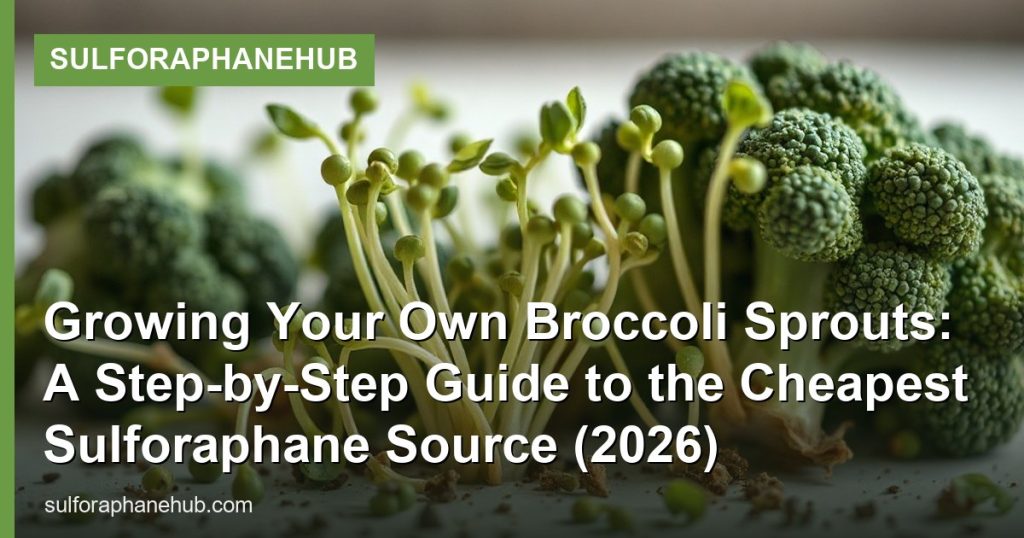
Growing Your Own Broccoli Sprouts: A Step-by-Step Guide to the Cheapest Sulforaphane Source (2026)
A step by step guide to sprouting broccoli seeds at home, why fresh sprouts keep their myrosinase, and how the cost compares with capsules.
A step by step guide to sprouting broccoli seeds at home, why fresh sprouts keep their myrosinase, and how the cost compares with capsules.
Raw broccoli holds glucoraphanin, not sulforaphane. How you chop, cook, and eat cruciferous vegetables decides whether the conversion happens at all.
Sulforaphane is not a typical antioxidant. It switches on the Keap1-Nrf2 pathway, activating a broad set of protective genes rather than scavenging radicals.
What sulforaphane is, where it comes from, how it is thought to work, and which claims the research supports versus what is still unproven.
A clear look at sulforaphane: how broccoli sprouts form it, why it activates Nrf2, and what the current research does and doesn’t show.
Glucoraphanin is the precursor; sulforaphane is the active compound. Here’s how conversion works, why it matters, and what to look for in a supplement.
How sulforaphane activates the Nrf2 pathway to upregulate the body’s antioxidant and detox enzymes, and what the current evidence does and doesn’t show.

Learn why broccoli sprouts often contain more sulforaphane than mature broccoli and how germination affects this key phytochemical.

How sulforaphane actually forms from broccoli sprouts: glucoraphanin, myrosinase, and the Nrf2 pathway explained simply and honestly.

How sulforaphane went from a Johns Hopkins lab discovery to broccoli sprout extracts and standardized supplements, and what the science actually shows.