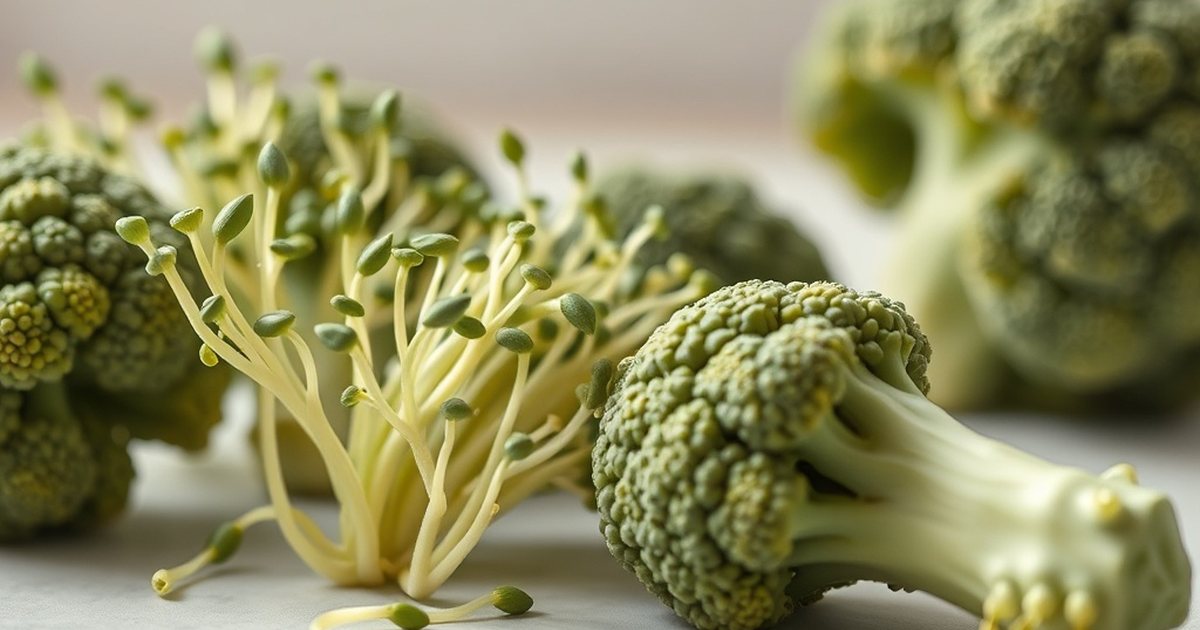
Sulforaphane is a small sulfur-containing compound that broccoli, broccoli sprouts, and other cruciferous vegetables don’t actually contain in ready-made form. Instead, these plants store a precursor called glucoraphanin, and when the plant tissue is damaged (by chewing, chopping, or sprouting), an enzyme called myrosinase converts glucoraphanin into sulforaphane. Broccoli sprouts are prized as a source because, gram for gram, young sprouts can carry substantially more glucoraphanin than mature broccoli heads.
Sulforaphane’s main claim to scientific interest is its role as an activator of the Nrf2 pathway, a cellular signaling system that turns on the body’s own antioxidant and detoxification enzymes. This article explains what sulforaphane is, how the Nrf2 mechanism works, what has actually been studied, and where the evidence is still early or limited. It is informational only and not medical advice.
Key Takeaways
- Sulforaphane forms when the enzyme myrosinase converts glucoraphanin, a compound in broccoli and broccoli sprouts, upon cutting or chewing.
- Its primary studied mechanism is activation of the Nrf2 pathway, which turns on antioxidant and detoxification genes.
- Current research spans mitochondrial function and muscle cells, microglial/neuroinflammatory balance, exercise immunometabolism, and broader aging biology, mostly at the preclinical and mechanistic stage.
- Fresh, minimally cooked broccoli sprouts are generally considered a higher-yield source than heavily cooked mature broccoli, because heat can deactivate myrosinase.
- This is an evolving research area, not a proven treatment; findings should not be interpreted as clinical guarantees.
From Glucoraphanin to Sulforaphane: How It's Formed
Glucoraphanin is a glucosinolate, a class of sulfur- and nitrogen-containing compounds that cruciferous vegetables produce partly as a natural defense mechanism. On its own, glucoraphanin has little biological activity. It needs to be converted.
That conversion happens via myrosinase, an enzyme kept in separate plant cells from the glucosinolate itself. When a broccoli sprout or floret is cut, chewed, or otherwise damaged, myrosinase and glucoraphanin come into contact and the reaction produces sulforaphane. This is why raw or lightly prepared crucifers (and especially fresh sprouts, which are enzymatically active) tend to yield more sulforaphane than heavily cooked versions, where heat can deactivate myrosinase before the reaction occurs.
The Nrf2 Pathway: Why Sulforaphane Is Studied
Nrf2 (nuclear factor erythroid 2-related factor 2) is a transcription factor that, once activated, moves into the cell nucleus and switches on a battery of genes involved in antioxidant defense and phase II detoxification enzymes. Under normal conditions Nrf2 is kept inactive; compounds like sulforaphane are known to disrupt that inhibition, allowing Nrf2 to accumulate and do its work.

This mechanism is why sulforaphane appears across several distinct areas of nutrition and aging research, including work on dietary phytochemicals and healthy-aging pathways involving the gut microbiota [1], and broader reviews of anti-aging phytochemical mechanisms studied from Caenorhabditis elegans and Drosophila models up through some clinical work [2]. The common thread is Nrf2’s role as a cellular stress-response switch, not a single specific health outcome.
Mitochondrial and Muscle Cell Research
One specific line of research has looked at how sulforaphane affects mitochondria, the energy-producing structures inside cells, and processes like mitophagy (clearance of damaged mitochondria) and mitochondrial biogenesis (formation of new ones). A study examining sulforaphane alongside urolithin A and ZLN005 found time-dependent changes in antioxidant capacity, mitophagy, and mitochondrial biogenesis in muscle cells [3].
Mitochondrial health has also been proposed as a therapeutic target in more acute conditions; a recent review discusses mitochondria as a strategic avenue in acute pancreatitis, situating compounds that support mitochondrial function within that broader therapeutic conversation [4]. It’s worth being direct here: this type of research is largely mechanistic and preclinical, and it does not mean sulforaphane treats or prevents any disease in people.
Neuroinflammation and Microglia
Microglia are the immune cells of the brain, and they can adopt different functional states, often broadly categorized as pro-inflammatory (M1) or more repair-oriented (M2). A review of nutraceuticals in neurodegenerative disease contexts discusses this M1/M2 microglial balance as a potential target for protective dietary compounds, including sulforaphane-related mechanisms [5].
This is an active and complex research area. Findings on nutraceutical-microglia interactions are still emerging, largely from preclinical and mechanistic work, and translating that into clear guidance for humans with neurodegenerative conditions is not yet established.

Exercise, Immune Function, and Muscle Cells
Sulforaphane also shows up in exercise immunometabolism research, a field examining how immune cells and muscle tissue interact with energy metabolism during and after physical activity. A recent review on this topic discusses dietary adjuvants, compounds that may support immune cell bioenergetics in the context of exercise and muscle-immune crosstalk [6].
Combined with the muscle-cell mitochondrial findings above [3], this positions sulforaphane as a compound of interest for exercise physiology researchers, though again this reflects an area of ongoing investigation rather than settled practical recommendations for athletes or exercisers.
What the Evidence Does and Doesn't Show
Across the studies cited here, sulforaphane appears repeatedly in mechanistic and preclinical research: cell culture models, animal and invertebrate models, and reviews synthesizing that work [1][2][3][5][6][4]. This is a legitimate and active area of nutrition science, but mechanistic plausibility is not the same as proven clinical benefit in humans.
None of the evidence listed here constitutes a large-scale human clinical trial establishing that sulforaphane supplementation prevents or treats a specific disease. Readers should treat sulforaphane as a compound under active study with a well-characterized biochemical mechanism, not as a proven remedy.
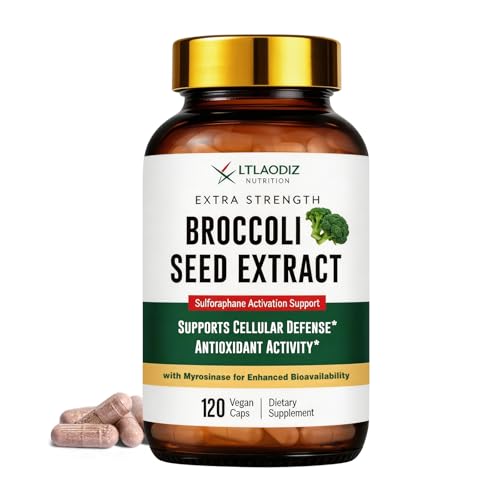
🛒 Where to Buy Sulforaphane
- Nutramax Laboratories Avmacol Regular Strength
tablets, 2 tablets daily — Sulforaphane-producing supplement used in human clinical trials; uses a glucoraphanin + active myrosinase Sulforaphane Production System - Swanson Sulforaphane Broccoli Sprout Extract
capsules, 1 capsule (400 mcg) daily — Budget-friendly option standardized to 0.4% sulforaphane from BroccoPhane concentrate - Source Naturals Broccoli Sprouts Extract
tablets, 1 tablet daily — Delivers 2,000 mcg sulforaphane per serving from freshly germinated broccoli sprouts - Nova Nutritions Broccoli Sprout Extract 1000mg
capsules, 1 capsule daily — Broccoli sprout extract; entry-level price point
As an Amazon Associate we earn from qualifying purchases. Sulforaphane quality depends on conversion, not price. Prefer a product that supplies active myrosinase or pre-converted stabilized sulforaphane rather than glucoraphanin alone, and look for a batch-specific certificate of analysis stating actual glucoraphanin or sulforaphane content, since a label that headlines sulforaphane while the supplement facts list only broccoli sprout extract gives you no way to verify potency.
A Note on the Evidence
Sulforaphane and broccoli sprout extract are generally well tolerated but can cause GI upset in some people at higher doses; very high cruciferous intake may have a mild goitrogenic effect relevant to thyroid conditions, and sulforaphane may interact with certain chemotherapy regimens, so anyone in active cancer treatment should consult their oncologist before use. This article is informational, not medical advice.
Frequently Asked Questions
What exactly is sulforaphane?
Sulforaphane is an isothiocyanate compound formed when glucoraphanin in broccoli and broccoli sprouts is converted by the enzyme myrosinase, typically released when the plant tissue is cut or chewed.
Why is sulforaphane linked to the Nrf2 pathway?
Sulforaphane is one of the most studied natural activators of Nrf2, a transcription factor that upregulates the body’s own antioxidant and phase II detoxification enzymes once activated [1][2].

Does sulforaphane affect mitochondria?
Research in muscle cells has found that sulforaphane, alongside compounds like urolithin A and ZLN005, produces time-dependent changes in antioxidant capacity, mitophagy, and mitochondrial biogenesis [3].
Is sulforaphane relevant to brain health?
Some research explores sulforaphane-related mechanisms in the context of microglial M1/M2 balance, a factor discussed in nutraceutical protection against neurodegenerative disease, though this work is still developing [5].
Why does broccoli sprout preparation matter?
Myrosinase, the enzyme needed to convert glucoraphanin into sulforaphane, can be deactivated by heat, so raw or lightly prepared sprouts and broccoli tend to support more conversion than heavily cooked versions.
Is sulforaphane FDA-approved or a proven treatment?
No. Sulforaphane and broccoli sprout extract are not FDA-evaluated as drugs. The research cited here is largely mechanistic and preclinical, and should not be read as evidence of a cure or guaranteed clinical benefit.
References
- Beaver LM et al. Promotion of Healthy Aging Through the Nexus of Gut Microbiota and Dietary Phytochemicals. Advances in nutrition (Bethesda, Md.) (2025). PMID 39832641
- Chen JC et al. Anti-aging effects of dietary phytochemicals: From Caenorhabditis elegans, Drosophila melanogaster, rodents to clinical studies. Critical reviews in food science and nutrition (2024). PMID 36597655
- Moradi N et al. Sulforaphane, Urolithin A, and ZLN005 induce time-dependent alterations in antioxidant capacity, mitophagy, and mitochondrial biogenesis in muscle cells. Sports medicine and health science (2025). PMID 39649792
- Chooklin S et al. Beyond Supportive Care: Mitochondria as a Strategic Therapeutic Avenue in Acute Pancreatitis. Digestive diseases and sciences (2026). PMID 41854947
- Darwish SF et al. The dual face of microglia (M1/M2) as a potential target in the protective effect of nutraceuticals against neurodegenerative diseases. Frontiers in aging (2023). PMID 37744008
- Islam H et al. Recent advances in exercise immunometabolism: Immune cell bioenergetics, muscle-immune cell interactions, and potential dietary adjuvants. Current opinion in clinical nutrition and metabolic care (2025). PMID 40815154
These statements have not been evaluated by the Food and Drug Administration. This information is not intended to diagnose, treat, cure, or prevent any disease. Content is for informational purposes only and is not medical advice; consult a qualified healthcare provider before starting any supplement. As an Amazon Associate we earn from qualifying purchases.
