Sulforaphane is not a compound you can put directly into a capsule and expect to work the way it does in fresh broccoli sprouts. It has to be formed, at the moment of use, when the precursor glucoraphanin meets the enzyme myrosinase. That single fact explains most of the variation you’ll find between sulforaphane products on the market, and it’s the first thing to understand before comparing labels or prices.
This guide walks through what actually matters when evaluating a sulforaphane or broccoli sprout supplement: how the glucoraphanin-to-sulforaphane conversion works, why myrosinase activity (or its absence) changes what you’re really buying, what standardization and testing claims are worth trusting, and which label phrases are marketing rather than substance. It does not recommend specific brands. It’s meant to help you ask better questions before you buy.
Key Takeaways
- Sulforaphane doesn’t exist ready-made in most raw material, it forms when glucoraphanin meets active myrosinase, so know which category your product falls into
- A label should state glucoraphanin (and ideally sulforaphane) content in milligrams with a stated test method, not just a raw extract weight
- Ask for a certificate of analysis and prefer products with independent third-party testing over in-house-only claims
- Be wary of proprietary blends with no compound breakdown, disease-treatment claims, or potency numbers with no verification behind them
- This is informational content, not medical advice, talk to your doctor before use if you’re on medication or managing a health condition
The Core Chemistry: Why Sulforaphane Supplements Aren't Simple
In broccoli and broccoli sprouts, sulforaphane doesn’t exist in meaningful amounts on its own. Instead, the plant stores a stable precursor called glucoraphanin, along with the enzyme myrosinase, in separate cell compartments. When the plant tissue is damaged, chewed, crushed, or blended, the two come into contact, and myrosinase converts glucoraphanin into active sulforaphane. This is the same defense mechanism that gives mustard, wasabi, and horseradish their pungency, all cruciferous vegetables use some version of this glucosinolate-myrosinase system.[1]
This matters for supplements because glucoraphanin and myrosinase behave very differently under processing, heat, drying, and storage. Myrosinase is a protein, and proteins denature. Heat, certain drying methods, and low pH (like stomach acid) can inactivate it. Glucoraphanin itself is far more stable and survives processing well. So a manufacturer can produce a product that is rich in glucoraphanin but has little to no active myrosinase left, meaning the conversion to sulforaphane may not happen efficiently, or at all, once you swallow it.[2]
Gut bacteria have some capacity to convert glucoraphanin to sulforaphane on their own, but this conversion is inconsistent between individuals and generally considered less efficient than enzymatic conversion via myrosinase.[3] This is the central design problem every sulforaphane supplement has to solve, and it’s the first lens to view any product through.

Reading the Label: Glucoraphanin-Only vs. Myrosinase-Active vs. Stabilized Sulforaphane
Broadly, sulforaphane-related supplements fall into a few categories, and the label should tell you which one you’re looking at, though it often takes some digging.
Glucoraphanin-only products supply the stable precursor with little or no active myrosinase, relying largely on gut bacteria for conversion. Myrosinase-active products pair glucoraphanin with a separate, protected source of active myrosinase (often from mustard seed or maintained broccoli seed extract), intended to drive conversion in the gut or upon mixing. Some products are formulated as stabilized or pre-converted sulforaphane, meaning the conversion has already happened during manufacturing and the capsule contains sulforaphane itself, which raises its own stability and shelf-life questions since sulforaphane is a reactive, somewhat unstable molecule.
None of these approaches is automatically superior in the abstract, but a label that doesn’t tell you which category a product falls into, or that uses ‘sulforaphane’ and ‘glucoraphanin’ interchangeably, is a label that isn’t giving you enough information to make an informed choice.
For worked examples of how these categories look on an actual label, we have reviewed individual products in the myrosinase-active and stabilized groups:
Standardization: What 'Standardized Extract' Should Actually Mean
Standardization means a manufacturer has measured and guaranteed a specific amount of an active compound per dose, rather than just listing a raw plant material weight. For sulforaphane products, this should mean a stated glucoraphanin content (often in milligrams) and, ideally, a stated yield or potential of active sulforaphane, not just ‘broccoli sprout extract, 500 mg’ with no further detail.
A meaningful standardization claim specifies the analytical method used (such as HPLC, high-performance liquid chromatography) to verify glucoraphanin or sulforaphane content, rather than just asserting a number. Reputable supplement companies are generally willing to disclose or provide a certificate of analysis showing this. If a company won’t say how they measured potency, treat the number on the label as a marketing figure rather than a verified one.

It’s also worth distinguishing the raw extract weight from the actual active compound content. A product listing ‘500 mg broccoli sprout extract’ tells you almost nothing about how much glucoraphanin or sulforaphane that contains, extract concentration ratios vary enormously between suppliers.
Third-Party Testing and Certificates of Analysis
Because sulforaphane and glucoraphanin content can vary significantly by growing conditions, seed source, and processing method, third-party verification matters more here than for many other supplement categories. Look for products that provide, or will provide on request, a certificate of analysis (COA) from an independent lab confirming the actual glucoraphanin and/or sulforaphane content of the specific batch you’re buying, not just a generic product spec sheet.
Independent quality certifications (such as NSF, USP, or Informed Choice/Informed Sport, depending on region and use case) add a layer of manufacturing and contamination verification, though they don’t necessarily confirm potency of the specific active compounds. The two types of verification, potency testing and quality/purity certification, answer different questions, and a rigorous product ideally offers both.
Be cautious of products that only cite in-house testing with no independent verification, especially when the claimed potency figures are unusually high compared to typical ranges reported in the research literature for broccoli sprout extracts.
Label Red Flags to Watch For
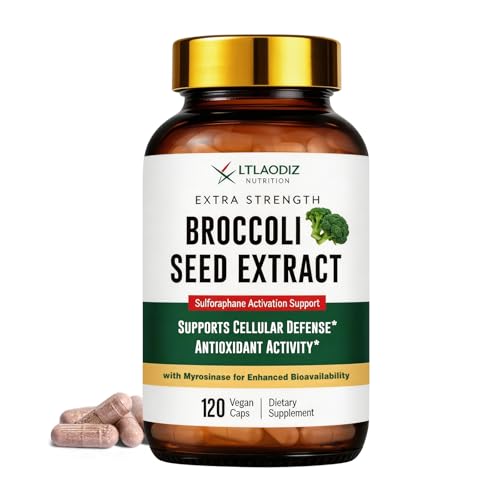
A few patterns show up repeatedly in weaker sulforaphane products. Vague dosing, terms like ‘proprietary blend’ without a breakdown of glucoraphanin versus other broccoli compounds, or a total ‘broccoli extract’ weight with no active compound percentage, should prompt questions rather than trust.
Unsupported superlatives are another flag: claims of curing, reversing, or treating specific diseases go well beyond what the current evidence on sulforaphane or Nrf2 pathway activation supports, and any product making disease-treatment claims is overstepping regulatory and scientific bounds. Similarly, be skeptical of products that claim sulforaphane content dramatically higher than what’s typically achievable from broccoli sprout extraction, without lab verification to back it up.
Finally, watch for a mismatch between the marketing copy and the supplement facts panel. If the front of the label emphasizes ‘sulforaphane’ prominently but the supplement facts only list ‘broccoli sprout extract’ or ‘glucoraphanin’ with no sulforaphane content stated, the product may be relying on the reader conflating the precursor with the active compound.
Practical Questions to Ask Before You Buy
Before purchasing, it’s reasonable to look for answers to: What is the glucoraphanin content per serving, in milligrams? Does the product include active myrosinase, or is it glucoraphanin-only relying on gut conversion, or is it pre-converted stabilized sulforaphane? What analytical method was used to verify potency, and is a COA available? Is there independent third-party testing for quality or contaminants, separate from potency claims?
It’s also worth considering your own situation. If you have a thyroid condition, are on a chemotherapy regimen, or take other medications, a conversation with your doctor or oncologist about cruciferous compound intake is a reasonable step before adding a concentrated supplement, since sulforaphane and broccoli sprout extracts are not evaluated by the FDA as drugs and interactions haven’t been fully mapped for every situation.

🛒 Where to Buy Sulforaphane
- Nutramax Laboratories Avmacol Regular Strength
tablets, 2 tablets daily — Sulforaphane-producing supplement used in human clinical trials; uses a glucoraphanin + active myrosinase Sulforaphane Production System - Swanson Sulforaphane Broccoli Sprout Extract
capsules, 1 capsule (400 mcg) daily — Budget-friendly option standardized to 0.4% sulforaphane from BroccoPhane concentrate - Source Naturals Broccoli Sprouts Extract
tablets, 1 tablet daily — Delivers 2,000 mcg sulforaphane per serving from freshly germinated broccoli sprouts - Nova Nutritions Broccoli Sprout Extract 1000mg
capsules, 1 capsule daily — Broccoli sprout extract; entry-level price point
As an Amazon Associate we earn from qualifying purchases. Sulforaphane quality depends on conversion, not price. Prefer a product that supplies active myrosinase or pre-converted stabilized sulforaphane rather than glucoraphanin alone, and look for a batch-specific certificate of analysis stating actual glucoraphanin or sulforaphane content, since a label that headlines sulforaphane while the supplement facts list only broccoli sprout extract gives you no way to verify potency.
A Note on the Evidence
This article reflects general scientific consensus on sulforaphane chemistry and supplement quality considerations, not a review of any specific brand or product, and it is informational rather than medical advice. If you have a thyroid condition, are pregnant, or are undergoing cancer treatment or taking other medications, consult your doctor before starting a sulforaphane or broccoli sprout supplement.
Frequently Asked Questions
Is a higher glucoraphanin number always better?
Not necessarily. What matters is whether that glucoraphanin can actually convert to sulforaphane, either through included myrosinase or reliable gut bacterial conversion. A high glucoraphanin number paired with no functional conversion pathway may deliver less active sulforaphane than a smaller, well-designed dose.
Does cooking broccoli destroy myrosinase the same way supplement processing can?
Yes, the underlying issue is the same: myrosinase is heat-sensitive, and steaming or boiling broccoli can significantly reduce its activity, which is one reason raw or lightly cooked broccoli sprouts are often discussed as a more reliable sulforaphane source than heavily cooked broccoli.[4]

Can I just eat broccoli sprouts instead of taking a supplement?
Fresh broccoli sprouts naturally contain both glucoraphanin and active myrosinase in the same plant tissue, which is part of why they’re commonly discussed as a direct source. Supplements exist mainly for convenience, standardized dosing, and shelf stability, not because they’re inherently superior to the fresh source.
What does 'Nrf2 activator' on a label actually mean?
It refers to sulforaphane’s proposed mechanism of activating the Nrf2 pathway, which in turn can upregulate the body’s own antioxidant and phase II detoxification enzymes. This is a mechanism description, not a guarantee of a specific health outcome, and the term is sometimes used more liberally in marketing than the underlying evidence supports for any single product.
Are all broccoli sprout extracts interchangeable?
No. Extraction method, seed source, growing conditions, and processing all affect glucoraphanin content and myrosinase activity, which is exactly why standardization and lab verification matter more for this category than a generic ‘broccoli extract’ label suggests.
Is it safe to take a sulforaphane supplement alongside medication?
It depends on the medication and your health status. Sulforaphane and broccoli sprout extract are generally well tolerated, though some people report GI upset, and very high cruciferous intake may have a mild goitrogenic effect relevant to thyroid conditions; there is also a possible interaction with certain chemotherapy regimens, so anyone in active cancer treatment should consult their oncologist first.
References
- Fahey JW et al. Broccoli sprouts: an exceptionally rich source of inducers of enzymes that protect against chemical carcinogens. Proceedings of the National Academy of Sciences (1997). PMID 9294217
- Fahey JW et al. Sulforaphane bioavailability from glucoraphanin-rich broccoli: control by active endogenous myrosinase. PLoS One (2015). PMID 26524341
- Fahey JW et al. Protection of humans by plant glucosinolates: efficiency of conversion of glucosinolates to isothiocyanates by the gastrointestinal microflora. Cancer Prevention Research (2012). PMID 22318753
- Conaway CC et al. Disposition of glucosinolates and sulforaphane in humans after ingestion of steamed and fresh broccoli. Nutrition and Cancer (2000). PMID 11525594
These statements have not been evaluated by the Food and Drug Administration. This information is not intended to diagnose, treat, cure, or prevent any disease. Content is for informational purposes only and is not medical advice; consult a qualified healthcare provider before starting any supplement. As an Amazon Associate we earn from qualifying purchases.
