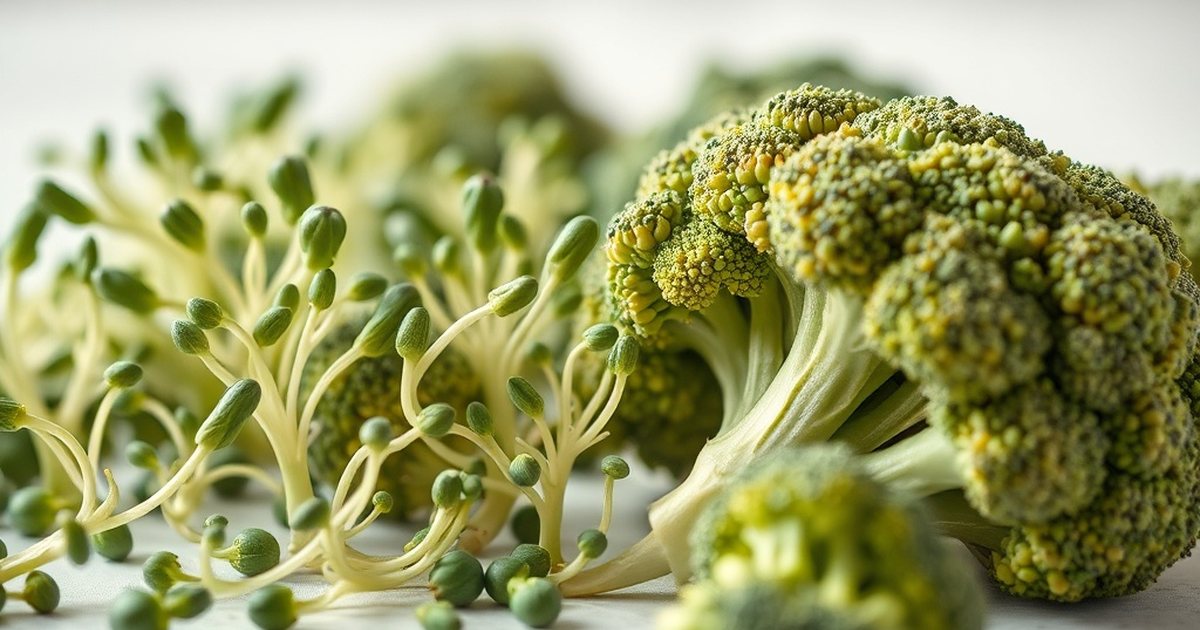
Sulforaphane is an isothiocyanate compound generated when glucoraphanin, a glucosinolate abundant in broccoli and especially broccoli sprouts, is converted by the plant enzyme myrosinase. Once formed, sulforaphane is one of the most-studied dietary activators of the Nrf2 pathway, a cellular system that governs antioxidant defenses and, increasingly, appears to intersect with inflammatory signaling. That intersection is why sulforaphane has drawn research interest in conditions ranging from vascular disease to kidney disease to viral infection.
This article walks through the proposed mechanism connecting sulforaphane to inflammation, then reviews what cell, animal, and human studies actually report, including where the evidence holds up and where it does not. It is written for people who want to understand the research landscape, not a recommendation to treat any condition, and it is not medical advice.
Key Takeaways
- Sulforaphane forms from glucoraphanin via the myrosinase enzyme, then activates the Nrf2 pathway, which has documented crosstalk with the pro-inflammatory NF-kB pathway [1].
- The strongest direct evidence for anti-inflammatory action comes from cell studies in dendritic cells and vascular tissue, where sulforaphane suppressed NF-kB signaling [2] [3] [4].
- Human clinical trial evidence is real but limited in size and consistency across conditions [5] [6].
- Results are not uniformly positive: a hemodialysis trial found no change in NRF2/NF-kB expression, showing the mechanism does not automatically produce a measurable effect in every population [7].
- Anyone undergoing chemotherapy should consult their oncologist before using sulforaphane or broccoli sprout extract, given documented interactions with chemotherapy-related pathways [8].
The Proposed Mechanism: From Broccoli to the Nrf2 Pathway
Glucoraphanin itself is biologically inert. It requires myrosinase, an enzyme released when plant cells are damaged by chewing, chopping, or crushing, to be converted into sulforaphane. Once absorbed, sulforaphane interacts with a sensor protein called KEAP1, which normally holds the transcription factor Nrf2 in check. When KEAP1 is modified, Nrf2 is released, moves into the cell nucleus, and binds to antioxidant response elements (ARE), switching on genes for phase II detoxification and antioxidant enzymes [1].
This Nrf2/KEAP1/ARE axis does not operate in isolation from inflammation. Reviews describe substantial crosstalk between Nrf2 signaling and the NF-kB pathway, the master regulator of pro-inflammatory gene expression, such that Nrf2 activation is frequently associated with dampened NF-kB activity in cell and animal models [1] [9]. This crosstalk is the mechanistic basis for most of sulforaphane’s anti-inflammatory research, though it is important to note that most of the direct evidence for this crosstalk comes from cell and animal studies rather than large human trials.

Direct Effects on Inflammatory Signaling in Immune Cells
Some of the clearest mechanistic evidence comes from work on dendritic cells, a type of immune cell central to initiating inflammatory responses. In human dendritic cells, sulforaphane has been shown to inhibit NF-kB and MAPK signaling pathways, reducing the downstream production of pro-inflammatory mediators [2]. A related line of research on sulforaphane glycoconjugates found similar suppression of lipopolysaccharide-induced inflammation in human dendritic cells through inhibition of NF-kB signaling specifically [3].
In vascular tissue, animal and cell-culture research has shown that sulforaphane reduces vascular inflammation and can prevent TNF-alpha-induced monocyte adhesion to endothelial cells, again by interfering with the NF-kB pathway [4]. Together, these studies point to a consistent mechanism across different cell types and models: sulforaphane appears to blunt NF-kB-driven inflammatory signaling upstream of where cytokines and adhesion molecules are produced. Consistency across models strengthens the mechanistic case, but it does not by itself establish clinical benefit in a specific disease.
Chronic Inflammatory Disease: What Clinical Evidence Exists
A dedicated review of clinical evidence for l-sulforaphane in chronic inflammatory disease concluded that early human data are promising for certain markers of inflammation and oxidative stress, but also noted that the number of well-controlled trials remains limited and results vary by condition and dose [5]. A more recent comprehensive analysis of clinical trials and mechanistic data reached a similar conclusion: sulforaphane shows biological plausibility and some positive signals across multiple conditions, but the clinical trial base is still small relative to the scope of conditions being studied, and effect sizes are often modest [6].

This is a common pattern in nutraceutical research: strong, mechanistically coherent laboratory evidence paired with a thinner and more mixed human trial record. Readers should weigh the mechanism as plausible and worth continued study, not as proof of a specific clinical effect.
Kidney Disease: A Case Study in Mixed Results
Chronic kidney disease and dialysis are areas where oxidative stress and inflammation are closely linked, making Nrf2 activation an attractive target. Diabetic kidney disease research has specifically implicated dysregulation of the NRF2/KEAP1/ARE pathway in disease progression, providing a rationale for testing Nrf2 activators like sulforaphane [1]. A broader systematic review of plant-based bioactive compounds in chronic kidney disease and dialysis patients likewise identified sulforaphane-rich foods among the compounds with potential relevance to inflammatory and oxidative markers in this population [10].
However, when tested directly, results have not always matched the mechanistic hypothesis. A trial of sulforaphane supplementation in hemodialysis patients found it did not modulate NRF2 or NF-kB mRNA expression as expected [7]. This null result is an important data point: it shows that Nrf2 activation observed in cell and animal models does not automatically translate into measurable changes in every human population, particularly one with significantly altered metabolism like dialysis patients. Any honest accounting of the inflammation evidence has to include this kind of negative finding, not just the positive ones.
Other Contexts Where Sulforaphane's Anti-Inflammatory Role Has Been Studied
Interest in Nrf2 activators expanded during the COVID-19 pandemic, with researchers proposing that Nrf2 activation, including via sulforaphane, could help counter the oxidative stress and inflammatory cytokine activity associated with severe viral infection. This was framed as a hypothesis-generating strategy worth investigating rather than an established treatment [11].
In neuroinflammation, sulforaphane has been explored as a potential neurotherapeutic in autism spectrum disorder research, with proposed effects operating through crosstalk between the Nrf2-Keap1 and NF-kB pathways in the brain [9]. Separately, in oncology supportive care, natural compounds including sulforaphane have been reviewed for their potential to reduce cisplatin-associated ototoxicity, a side effect partly driven by oxidative and inflammatory damage to the inner ear, while research in this area also considers how such compounds interact with chemotherapy efficacy itself [8]. This is precisely the context where the caution about chemotherapy interactions matters most: anyone in active cancer treatment should discuss any sulforaphane or broccoli sprout extract use with their oncologist before starting.
🛒 Where to Buy Sulforaphane
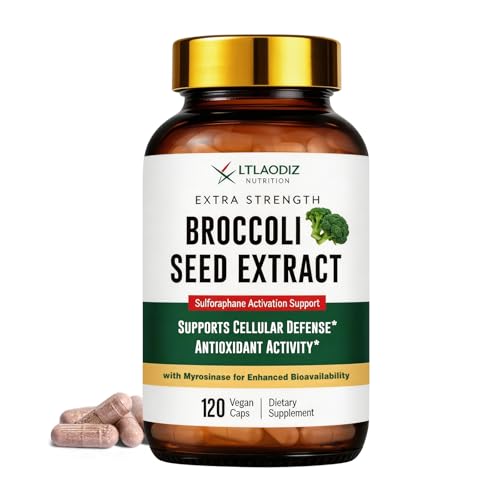
- Nutramax Laboratories Avmacol Regular Strength
tablets, 2 tablets daily — Sulforaphane-producing supplement used in human clinical trials; uses a glucoraphanin + active myrosinase Sulforaphane Production System - Swanson Sulforaphane Broccoli Sprout Extract
capsules, 1 capsule (400 mcg) daily — Budget-friendly option standardized to 0.4% sulforaphane from BroccoPhane concentrate - Source Naturals Broccoli Sprouts Extract
tablets, 1 tablet daily — Delivers 2,000 mcg sulforaphane per serving from freshly germinated broccoli sprouts - Nova Nutritions Broccoli Sprout Extract 1000mg
capsules, 1 capsule daily — Broccoli sprout extract; entry-level price point
As an Amazon Associate we earn from qualifying purchases. Sulforaphane quality depends on conversion, not price. Prefer a product that supplies active myrosinase or pre-converted stabilized sulforaphane rather than glucoraphanin alone, and look for a batch-specific certificate of analysis stating actual glucoraphanin or sulforaphane content, since a label that headlines sulforaphane while the supplement facts list only broccoli sprout extract gives you no way to verify potency.
A Note on the Evidence
Much of the anti-inflammatory evidence for sulforaphane comes from cell and animal studies, and human trial results are mixed, including at least one null finding in dialysis patients. Sulforaphane and broccoli sprout extract are not FDA-evaluated as drugs; most people tolerate them well, though some report GI upset at higher doses, very high cruciferous intake may have a mild goitrogenic effect relevant to thyroid conditions, and anyone in active cancer treatment should consult their oncologist before use. This article is informational, not medical advice.

Frequently Asked Questions
Does sulforaphane directly block inflammation, or does it work indirectly?
Research suggests both: it activates the Nrf2 antioxidant pathway, and separately, cell studies show it can directly inhibit NF-kB and MAPK inflammatory signaling in immune cells like dendritic cells [2] [3].
Is sulforaphane proven to help with a specific inflammatory disease?
Not conclusively. Reviews of clinical trials describe promising but limited evidence across multiple chronic inflammatory conditions, not a single well-established indication [5] [6].
Does sulforaphane help kidney inflammation?
The rationale is strong, since Nrf2/KEAP1 dysregulation is implicated in diabetic kidney disease [1], but a direct trial in hemodialysis patients found no change in NRF2 or NF-kB expression, so this is not settled [7].

Was sulforaphane studied for COVID-19?
It was proposed as a candidate strategy based on its Nrf2-activating, potentially anti-inflammatory properties during the pandemic, but this was a hypothesis under investigation, not an established treatment [11].
Can sulforaphane affect inflammation in the brain?
Early research has explored sulforaphane’s effects on Nrf2-Keap1 and NF-kB pathway crosstalk in the context of autism spectrum disorder, but this remains an emerging area of neuroscience research [9].
Is sulforaphane safe to take with chemotherapy?
This requires direct medical guidance. Research has examined interactions between natural compounds like sulforaphane and chemotherapy agents such as cisplatin, including effects on both toxicity and treatment efficacy, so anyone in active cancer treatment should consult their oncologist first [8].
References
- Tanase DM et al. Oxidative Stress and NRF2/KEAP1/ARE Pathway in Diabetic Kidney Disease (DKD): New Perspectives. Biomolecules (2022). PMID 36139066
- Múnera-Rodríguez AM et al. Sulforaphane-mediated immune regulation through inhibition of NF-kB and MAPK signaling pathways in human dendritic cells. Biomedicine & pharmacotherapy = Biomedecine & pharmacotherapie (2024). PMID 38945082
- Leiva-Castro C et al. Monovalent glycoconjugates of sulforaphane prevent inflammation induced by lipopolysaccharide in human dendritic cells by inhibiting NF-ĸB signalling pathway. British journal of pharmacology (2025). PMID 40533430
- Nallasamy P et al. Sulforaphane reduces vascular inflammation in mice and prevents TNF-α-induced monocyte adhesion to primary endothelial cells through interfering with the NF-κB pathway. The Journal of nutritional biochemistry (2014). PMID 24880493
- Mazarakis N et al. The potential use of l-sulforaphane for the treatment of chronic inflammatory diseases: A review of the clinical evidence. Clinical nutrition (Edinburgh, Scotland) (2020). PMID 30954362
- Saito A et al. Sulforaphane as a potential therapeutic agent: a comprehensive analysis of clinical trials and mechanistic insights. Journal of nutritional science (2025). PMID 40988712
- Ribeiro M et al. Sulforaphane Supplementation Did Not Modulate NRF2 and NF-kB mRNA Expressions in Hemodialysis Patients. Journal of renal nutrition : the official journal of the Council on Renal Nutrition of the National Kidney Foundation (2024). PMID 37619675
- Rybak LP et al. Effects of natural products on cisplatin ototoxicity and chemotherapeutic efficacy. Expert opinion on drug metabolism & toxicology (2023). PMID 37728555
- Shah A et al. Exploring sulforaphane as neurotherapeutic: targeting Nrf2-Keap & Nf-Kb pathway crosstalk in ASD. Metabolic brain disease (2024). PMID 37249861
- Josa E et al. Potential Effects of Bioactive Compounds of Plant-Based Foods and Medicinal Plants in Chronic Kidney Disease and Dialysis: A Systematic Review. Nutrients (2024). PMID 39770942
- Cuadrado A et al. Can Activation of NRF2 Be a Strategy against COVID-19?. Trends in pharmacological sciences (2020). PMID 32711925
These statements have not been evaluated by the Food and Drug Administration. This information is not intended to diagnose, treat, cure, or prevent any disease. Content is for informational purposes only and is not medical advice; consult a qualified healthcare provider before starting any supplement. As an Amazon Associate we earn from qualifying purchases.
