Sulforaphane is an isothiocyanate compound formed when glucoraphanin, a compound naturally present in broccoli and broccoli sprouts, is converted by the enzyme myrosinase. Once formed, sulforaphane is one of the most extensively studied natural activators of the Nrf2 pathway, which upregulates the body’s own antioxidant and phase II detoxification enzymes. That mechanistic story is well established in lab and animal models, but a much more practical question comes up constantly: how much sulforaphane, or how much glucoraphanin precursor, did the actual human clinical trials use?
There is no single agreed-upon ‘sulforaphane dose.’ Trials have used everything from broccoli sprout beverages to purified extracts to combined glucoraphanin-plus-myrosinase formulations, in populations ranging from healthy adults to children with autism spectrum disorder to former smokers at risk for lung cancer. This article walks through what specific trials actually administered, why dose and formulation interact in ways that matter, and where the honest limits of current human evidence sit.
Key Takeaways
- There is no single standardized human dose of sulforaphane; trials vary by formulation, population, and outcome measured.
- Bioavailability depends heavily on active myrosinase being present alongside glucoraphanin, not just the glucoraphanin amount itself [1] [2].
- Cancer prevention trials in high-risk populations (former smokers) have used defined multi-week oral dosing regimens [3].
- Psychiatric trials in autism and schizophrenia used fixed daily doses over defined trial periods, distinct from prevention-focused dosing [4] [5].
- Acute-outcome studies, like exercise recovery, use shorter dosing windows than chronic-disease prevention trials [6].
Why 'Dose' Is Not a Simple Number for Sulforaphane
Unlike a standardized drug, sulforaphane is rarely dosed as a single fixed molecule delivered the same way across studies. Most human trials instead dose either broccoli sprout extract or glucoraphanin, and outcomes depend heavily on whether active myrosinase is present at the time of ingestion to convert glucoraphanin into sulforaphane. A 2019 review examining broccoli and sulforaphane sources directly asked whether it is the plant source or the dose that matters most for delivering a meaningful sulforaphane exposure, underscoring that formulation and conversion efficiency are inseparable from the dose number itself [1].

Animal work reinforces this point at a metabolic level: a study tracking the metabolic fate of purified glucoraphanin in rats found that absorption and conversion depend on gut microbial activity when dietary myrosinase is absent, meaning the same nominal glucoraphanin dose can produce very different internal sulforaphane exposure depending on gut flora and co-ingested enzyme [7].
Doses Used in Bioavailability and Delivery-Method Trials
A cross-over clinical trial conducted in Qidong, China compared two broccoli sprout beverages formulated to deliver defined amounts of glucoraphanin and sulforaphane, directly measuring how delivery format affected bioavailability in humans over a short-term dosing period [8]. This kind of head-to-head comparison is central to understanding dosage, because two products advertised with similar headline sulforaphane content can produce very different blood levels depending on formulation.
More recently, a randomized study tested whether adding exogenous myrosinase from mustard seed to a glucoraphanin-rich broccoli seed extract could increase sulforaphane bioavailability compared to the extract alone, confirming that the enzyme co-administered with the precursor is itself a dosing variable, not just the glucoraphanin amount [2]. In practical terms, two supplements listing the same glucoraphanin milligrams are not necessarily equivalent doses of usable sulforaphane.
Doses Used in Disease-Specific and Prevention Trials
In cancer prevention research, a randomized Phase II trial tested sulforaphane in former smokers considered at high risk for lung cancer, using a defined oral dosing regimen over a set trial period to evaluate biomarkers relevant to lung cancer risk reduction [3]. This represents one of the more rigorous recent human dosing frameworks specifically built around a defined at-risk population rather than healthy volunteers.

In pregnancy-related research, the Prolong trial protocol describes a double-blind, randomized, placebo-controlled design testing broccoli sprout extract in women with early-onset preeclampsia, with a specific dosing schedule built into the trial protocol for this vulnerable population [9]. Psychiatric research has also used clearly defined dosing: a randomized, double-blind, placebo-controlled trial tested sulforaphane as an adjunctive treatment for irritability in children with autism spectrum disorder using a set daily dose over a defined trial duration [4], and a separate randomized controlled trial tested sulforaphane added to antipsychotic medication for negative symptoms of schizophrenia, again using a specified daily dosing regimen [5].
Doses in Non-Cancer, Non-Psychiatric Applications
Sulforaphane and related glucoraphanin compounds have also been tested outside oncology and psychiatry. A double-blind randomized crossover study examined whether broccoli-derived glucoraphanin, dosed over a short-term period, affected recovery from eccentric exercise-induced muscle damage, using a defined dosing window before and after the muscle-damaging exercise protocol [6]. This reflects a much shorter-term dosing model than the cancer prevention or psychiatric trials, aimed at an acute physiological outcome rather than a chronic disease endpoint.
Separately, research on kale-derived exosome-like nanoparticles examined anti-skin-aging effects using a distinct delivery format entirely, illustrating that cruciferous-vegetable-derived compounds are being tested in dosing models well beyond the classic sprout-extract capsule or beverage [10].
Mechanistic Dosing Rationale: Why These Amounts Were Chosen
The doses used across these trials are not arbitrary; they trace back to sulforaphane’s role as an Nrf2 pathway activator and its proposed epigenetic effects. A review of dietary sulforaphane in cancer chemoprevention discusses its role in epigenetic regulation, including histone deacetylase (HDAC) inhibition, as a mechanistic basis for the dose ranges explored in chemoprevention trials [11]. Similarly, research on cruciferous vegetable phytochemicals in prostate cancer prevention discusses epigenetic mechanisms that inform why researchers target sustained, rather than one-time, sulforaphane or glucoraphanin exposure in prevention-focused dosing designs [12].
Taken together, this body of mechanistic work explains why chronic-disease-prevention trials tend to use longer dosing windows at moderate daily amounts, while acute-outcome trials, such as the muscle-recovery study, use shorter and more time-restricted dosing around a specific physical event.
What This Means If You're Trying to Choose a Dose
No governing body has established an official recommended dose of sulforaphane or glucoraphanin extract, and the trials above used doses tailored to specific populations and outcomes; a dose studied in former smokers for lung cancer biomarkers is not automatically the right dose for someone considering a supplement for general wellness. Because bioavailability depends so heavily on whether active myrosinase is present [1] [2] [8], a product’s glucoraphanin content alone does not tell you how much sulforaphane you will actually absorb.
Anyone comparing supplements or considering sulforaphane for a specific health concern should look for products that specify both the glucoraphanin (or sulforaphane) content and the presence of active myrosinase or a comparable conversion mechanism, and should weigh that against the specific trial population most relevant to their situation rather than assuming all sulforaphane doses are interchangeable.

🛒 Where to Buy Sulforaphane
- Nutramax Laboratories Avmacol Regular Strength
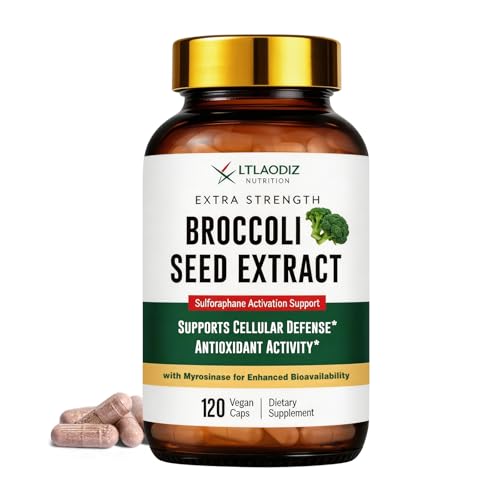
tablets, 2 tablets daily — Sulforaphane-producing supplement used in human clinical trials; uses a glucoraphanin + active myrosinase Sulforaphane Production System - Swanson Sulforaphane Broccoli Sprout Extract
capsules, 1 capsule (400 mcg) daily — Budget-friendly option standardized to 0.4% sulforaphane from BroccoPhane concentrate - Source Naturals Broccoli Sprouts Extract
tablets, 1 tablet daily — Delivers 2,000 mcg sulforaphane per serving from freshly germinated broccoli sprouts - Nova Nutritions Broccoli Sprout Extract 1000mg
capsules, 1 capsule daily — Broccoli sprout extract; entry-level price point
As an Amazon Associate we earn from qualifying purchases. Sulforaphane quality depends on conversion, not price. Prefer a product that supplies active myrosinase or pre-converted stabilized sulforaphane rather than glucoraphanin alone, and look for a batch-specific certificate of analysis stating actual glucoraphanin or sulforaphane content, since a label that headlines sulforaphane while the supplement facts list only broccoli sprout extract gives you no way to verify potency.
A Note on the Evidence
Most of the trials cited above are small, population-specific, or early-stage, and dosing protocols were not designed to be directly compared to one another or extrapolated into a universal recommendation. Sulforaphane and broccoli sprout extract are not FDA-evaluated as drugs, some users report GI upset at higher doses, very high cruciferous intake may have a mild goitrogenic effect relevant to thyroid conditions, and sulforaphane may interact with certain chemotherapy regimens, so anyone in active cancer treatment, pregnant, or managing a chronic condition should consult their doctor before starting any dose. This article is informational and not medical advice.

Frequently Asked Questions
What is the standard sulforaphane dose used in research?
There isn’t one standard dose. Trials range from short-term bioavailability studies using broccoli sprout beverages [8] to multi-week regimens in cancer prevention [3] and fixed daily doses in psychiatric trials [4] [5], each tailored to its own population and outcome.
Does more glucoraphanin always mean more sulforaphane?
No. Conversion of glucoraphanin to sulforaphane depends on active myrosinase being present, and research shows that adding exogenous myrosinase can meaningfully increase bioavailability compared to glucoraphanin alone [2] [7].
Has sulforaphane dosage been studied in children?
Yes, a randomized, double-blind, placebo-controlled trial tested sulforaphane as an adjunctive treatment for irritability in children with autism spectrum disorder using a defined dosing protocol [4]. Pediatric use should only be considered under medical supervision.
Is there a dose used specifically for cancer prevention research?
A randomized Phase II trial tested a defined oral sulforaphane dosing regimen in former smokers at high risk for lung cancer, evaluating relevant biomarkers over the trial period [3]. This is a research dose in a specific at-risk population, not a general recommendation.

Do broccoli sprout beverages and capsules deliver the same dose?
Not necessarily. A cross-over trial comparing two broccoli sprout beverages found bioavailability differences tied to formulation, even when marketed sulforaphane or glucoraphanin content looked similar [8], and a 2019 review specifically questioned whether source or dose matters more for meaningful delivery [1].
Is sulforaphane dosage relevant to short-term uses like exercise recovery?
Yes. A double-blind randomized crossover study tested broccoli-derived glucoraphanin dosed around eccentric exercise to examine effects on muscle damage recovery, using a much shorter dosing window than chronic-disease trials [6].
References
- Yagishita Y et al. Broccoli or Sulforaphane: Is It the Source or Dose That Matters?. Molecules (Basel, Switzerland) (2019). PMID 31590459
- Mastaloudis A et al. Exogenous myrosinase from mustard seed increases bioavailability of sulforaphane from a glucoraphanin-rich broccoli seed extract in a randomized clinical study. Scientific reports (2026). PMID 41692762
- Yuan JM et al. Randomized Phase II Clinical Trial of Sulforaphane in Former Smokers at High Risk for Lung Cancer. Cancer prevention research (Philadelphia, Pa.) (2025). PMID 40041932
- Momtazmanesh S et al. Sulforaphane as an adjunctive treatment for irritability in children with autism spectrum disorder: A randomized, double-blind, placebo-controlled clinical trial. Psychiatry and clinical neurosciences (2020). PMID 32347624
- Huang J et al. Efficacy and Safety of Sulforaphane Added to Antipsychotics for the Treatment of Negative Symptoms of Schizophrenia: A Randomized Controlled Trial. The Journal of clinical psychiatry (2025). PMID 39832347
- Cesanelli L et al. Short-Term Effects of Broccoli-Derived Glucoraphanin on Recovery from Eccentric Muscle Damage: A Double-Blind Randomized Crossover Study. Nutrients (2026). PMID 41754227
- Bheemreddy RM et al. The metabolic fate of purified glucoraphanin in F344 rats. Journal of agricultural and food chemistry (2007). PMID 17367161
- Egner PA et al. Bioavailability of Sulforaphane from two broccoli sprout beverages: results of a short-term, cross-over clinical trial in Qidong, China. Cancer prevention research (Philadelphia, Pa.) (2011). PMID 21372038
- Langston-Cox AG et al. Prolong: a double-blind randomised placebo-controlled trial of broccoli sprout extract in women with early onset preeclampsia. A clinical trial protocol. BMJ open (2019). PMID 31628121
- Katayama S et al. [Anti-skin Aging Effects of Kale-derived Exosome-like Nanoparticles]. Yakugaku zasshi : Journal of the Pharmaceutical Society of Japan (2025). PMID 39756921
- Tortorella SM et al. Dietary Sulforaphane in Cancer Chemoprevention: The Role of Epigenetic Regulation and HDAC Inhibition. Antioxidants & redox signaling (2015). PMID 25364882
- W Watson G et al. Phytochemicals from cruciferous vegetables, epigenetics, and prostate cancer prevention. The AAPS journal (2013). PMID 23800833
These statements have not been evaluated by the Food and Drug Administration. This information is not intended to diagnose, treat, cure, or prevent any disease. Content is for informational purposes only and is not medical advice; consult a qualified healthcare provider before starting any supplement. As an Amazon Associate we earn from qualifying purchases.
