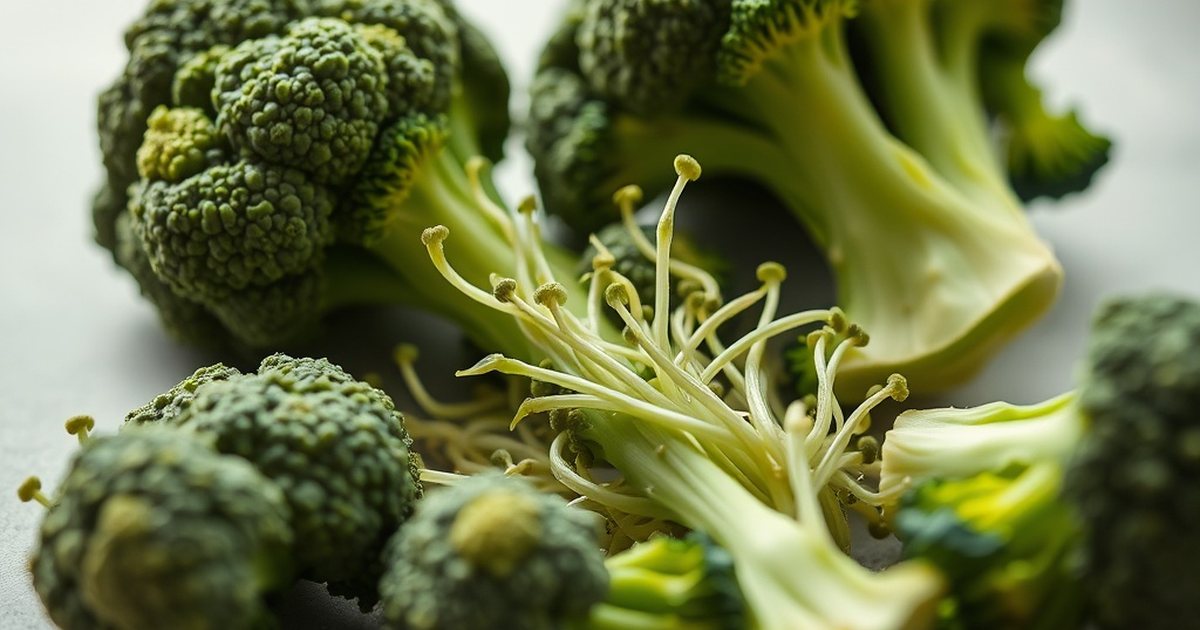
Sulforaphane doesn’t act like a typical antioxidant supplement. Instead of directly neutralizing free radicals the way vitamin C or vitamin E might, it works indirectly, by switching on the body’s own antioxidant defense system. This compound forms when glucoraphanin, a natural precursor found in broccoli and especially broccoli sprouts, is converted by the enzyme myrosinase, which is released when the plant tissue is chewed, chopped, or crushed.
Once formed, sulforaphane activates a cellular pathway called Nrf2, which in turn tells cells to ramp up production of their own detoxification and antioxidant enzymes. This article walks through what that mechanism actually means, what human studies have found so far, and where the evidence is still limited.
Key Takeaways
- Sulforaphane is an indirect antioxidant: it activates the Nrf2 pathway, which upregulates the body’s own phase II detoxification and antioxidant enzymes, rather than neutralizing free radicals directly [1].
- Human evidence supports this mechanism in specific contexts: increased phase II enzyme activity in upper airway tissue [2] and improved liver markers in men with hepatic abnormalities after broccoli sprout extract [3].
- Foundational research on phase II enzyme induction as a protective strategy predates and underpins current sulforaphane research [4] [5] [6].
- At a cellular level, sulforaphane may act as a mild pro-oxidant that triggers a larger protective antioxidant response, a hormetic mechanism rather than direct free-radical scavenging [1].
- Human trials remain limited in number and scope; more research is needed across broader populations and tissue types before strong general claims can be made.
The Nrf2 Pathway: How Sulforaphane Triggers Antioxidant Production
Nrf2 (nuclear factor erythroid 2-related factor 2) is a protein that, when activated, moves into the cell nucleus and switches on genes responsible for producing phase II detoxification and antioxidant enzymes. Sulforaphane is considered one of the most potent naturally occurring activators of this pathway, which is why it’s often described as an ‘indirect antioxidant’: it doesn’t mop up free radicals itself, it boosts the body’s own enzymatic defenses [1].
This distinction matters. Direct antioxidants get consumed as they neutralize free radicals, but the enzymes induced through Nrf2 activation, such as NAD(P)H:quinone oxidoreductase (NQO1) and glutathione S-transferases, are catalytic and can be reused repeatedly. Early research into this class of compounds, including dithiolethiones structurally related to sulforaphane’s mechanism, established the basic premise that inducing phase II enzymes is a viable route to cellular protection against oxidative and chemical stress [4] [5].

What Phase II Enzymes Actually Do
Phase II enzymes are part of the body’s detoxification system. They work by attaching molecules like glutathione to potentially harmful compounds, including reactive oxygen species and environmental toxins, making them easier to neutralize and clear from the body. Because oxidative stress is implicated in a wide range of chronic conditions, researchers have studied whether dietary induction of these enzymes could serve as a preventive strategy [5].
Reviews of chemoprevention strategies have specifically highlighted sulforaphane and related isothiocyanates as promising dietary inducers of phase II xenobiotic-metabolizing enzymes, noting their relevance to protecting tissues exposed to airborne or ingested carcinogens [6]. It’s worth noting that much of this foundational work draws on a mix of cell and animal models alongside human data, so the strength of evidence varies by claim.
Human Evidence: The Upper Airway Study
One of the more direct pieces of human evidence comes from a study examining oral sulforaphane’s effect on Phase II antioxidant enzyme activity in the human upper airway. Researchers found that sulforaphane administration increased the activity of these protective enzymes in airway tissue, supporting the idea that the Nrf2-activation mechanism seen in lab and animal models also occurs in living human tissue after oral intake [2].
This kind of tissue-level human data is valuable because it moves the discussion beyond cell culture or rodent studies into results measured directly in people. That said, it’s a single study focused on one tissue type (the upper airway), so it doesn’t establish how broadly or how strongly this effect extends to other organ systems.

Human Evidence: Liver Health and Sulforaphane-Rich Broccoli Sprout Extract
A separate human study looked at broccoli sprout extract rich in sulforaphane in men with hepatic (liver) abnormalities, finding that supplementation improved markers of liver function [3]. Since oxidative stress is one contributor to liver dysfunction, this finding is often cited as indirect support for sulforaphane’s antioxidant-pathway activity translating into a measurable clinical outcome, not just enzyme activity on a lab panel.
As with the airway study, this is a single trial in a specific population (male subjects with existing hepatic abnormalities), so it shouldn’t be generalized to people with healthy liver function or extrapolated to other organs without further research.
The Dual Role of Sulforaphane in Mitochondrial Function
Interestingly, sulforaphane’s relationship with oxidative stress isn’t entirely one-directional. Research on mitochondrial function has described sulforaphane as having a ‘seemingly contradictory dual role’: at certain concentrations it can act as a mild pro-oxidant stressor, which is actually what triggers the protective Nrf2 response, while its downstream effect is net antioxidant protection [1]. This is sometimes referred to as a hormetic effect, a small, controlled stress that prompts a larger protective adaptation.
This nuance is a useful reminder that ‘antioxidant’ compounds don’t always work by directly scavenging free radicals. In sulforaphane’s case, the mechanism is more like training the body’s defense systems than supplying raw antioxidant capacity directly.
Where the Evidence Is Strong, and Where It's Still Limited
The mechanistic case for sulforaphane’s antioxidant effects, glucoraphanin conversion, Nrf2 activation, phase II enzyme induction, is well established across cell, animal, and some human research [4] [5] [6] [1]. Direct human trials measuring these effects, however, remain relatively few, and the ones available focus on specific tissues or populations, such as the upper airway [2] or liver markers in men with existing hepatic abnormalities [3].
That leaves open questions: how consistent is the effect across different tissues, doses, and formulations (fresh sprouts versus extracts versus stabilized supplements)? How long do the enzyme-inducing effects last after a single dose or with regular intake? Larger, more diverse human trials would help answer these questions with more confidence.
🛒 Where to Buy Sulforaphane
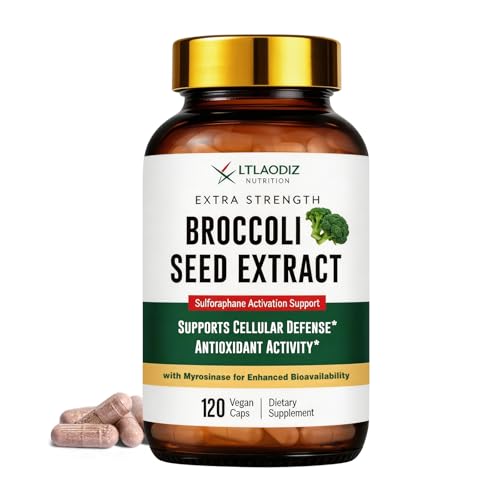
- Nutramax Laboratories Avmacol Regular Strength
tablets, 2 tablets daily — Sulforaphane-producing supplement used in human clinical trials; uses a glucoraphanin + active myrosinase Sulforaphane Production System - Swanson Sulforaphane Broccoli Sprout Extract
capsules, 1 capsule (400 mcg) daily — Budget-friendly option standardized to 0.4% sulforaphane from BroccoPhane concentrate - Source Naturals Broccoli Sprouts Extract
tablets, 1 tablet daily — Delivers 2,000 mcg sulforaphane per serving from freshly germinated broccoli sprouts - Nova Nutritions Broccoli Sprout Extract 1000mg
capsules, 1 capsule daily — Broccoli sprout extract; entry-level price point
As an Amazon Associate we earn from qualifying purchases. Sulforaphane quality depends on conversion, not price. Prefer a product that supplies active myrosinase or pre-converted stabilized sulforaphane rather than glucoraphanin alone, and look for a batch-specific certificate of analysis stating actual glucoraphanin or sulforaphane content, since a label that headlines sulforaphane while the supplement facts list only broccoli sprout extract gives you no way to verify potency.

A Note on the Evidence
This overview reflects a mix of mechanistic, animal, and limited human research; broccoli sprout extract and sulforaphane are not FDA-evaluated as drugs, and some people report GI upset at higher doses. Anyone with a thyroid condition, in active cancer treatment, or taking chemotherapy should consult their doctor before using concentrated sulforaphane products, as very high cruciferous intake may have mild goitrogenic effects and sulforaphane may interact with certain chemotherapy regimens. This is informational content, not medical advice.
Frequently Asked Questions
Is sulforaphane a direct antioxidant like vitamin C?
No. Sulforaphane is considered an indirect antioxidant, meaning it works by activating the Nrf2 pathway, which upregulates the body’s own antioxidant and detoxification enzymes, rather than directly neutralizing free radicals itself [1].
What is the Nrf2 pathway?
Nrf2 is a cellular signaling pathway that, when activated, turns on genes responsible for producing phase II antioxidant and detoxification enzymes. Sulforaphane is one of the most studied natural activators of this pathway [1].
Has sulforaphane's antioxidant effect been shown in humans, or just lab studies?
Both. Foundational mechanistic work has largely come from cell and animal research [4] [5] [6], but there is human evidence too, including increased phase II enzyme activity in upper airway tissue after oral sulforaphane [2] and improved liver markers in a trial of men with hepatic abnormalities [3].

How does sulforaphane get made from broccoli?
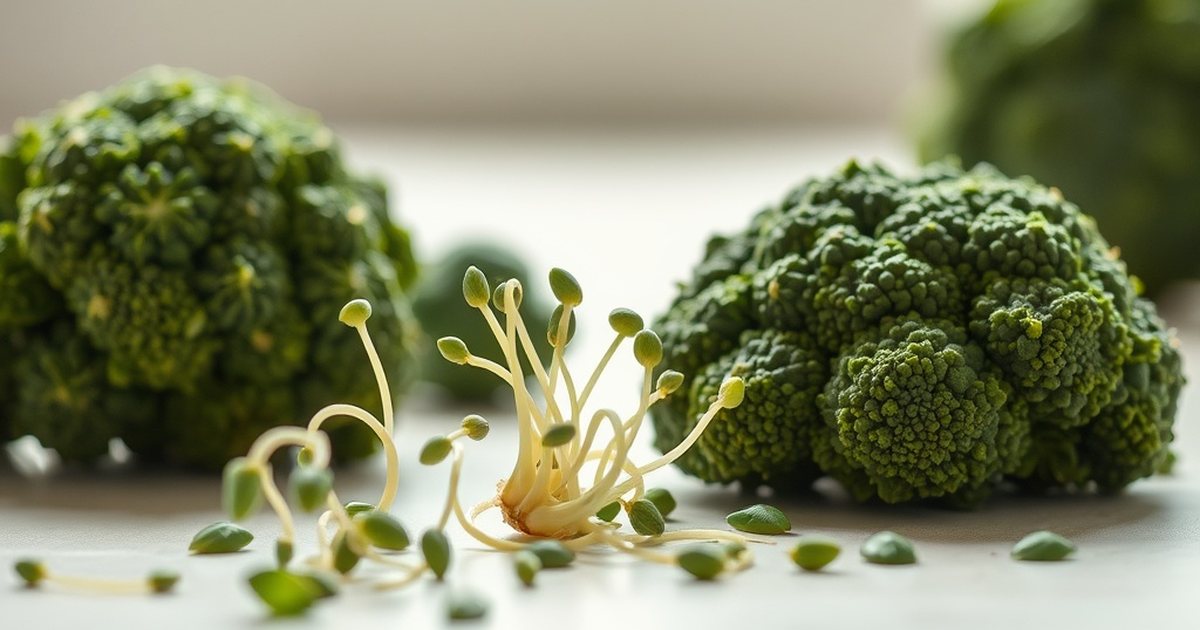
Sulforaphane isn’t present in intact broccoli itself. It forms when glucoraphanin, a precursor compound, is converted by the enzyme myrosinase, which is released when the plant is chewed, chopped, or crushed. Broccoli sprouts tend to have a higher glucoraphanin content than mature broccoli.
Does sulforaphane help with liver health?
One human study found that sulforaphane-rich broccoli sprout extract improved markers of hepatic (liver) abnormalities in male subjects [3]. This is a single trial in a specific population, so it shouldn’t be taken as proof of a broad liver-health benefit.
Are there any downsides to sulforaphane's oxidative effects?
Research suggests sulforaphane can act as a mild pro-oxidant at a cellular level, which is actually part of the mechanism that triggers the body’s protective antioxidant response, described as a ‘seemingly contradictory dual role’ [1]. This isn’t necessarily a downside, but it illustrates that the antioxidant story is more nuanced than ‘more antioxidant activity is always better.’
References
- Negrette-Guzmán M et al. Modulation of mitochondrial functions by the indirect antioxidant sulforaphane: a seemingly contradictory dual role and an integrative hypothesis. Free radical biology & medicine (2013). PMID 23999506
- Riedl MA et al. Oral sulforaphane increases Phase II antioxidant enzymes in the human upper airway. Clinical immunology (Orlando, Fla.) (2009). PMID 19028145
- Kikuchi M et al. Sulforaphane-rich broccoli sprout extract improves hepatic abnormalities in male subjects. World journal of gastroenterology (2015). PMID 26604653
- Kensler TW et al. Chemoprotection by organosulfur inducers of phase 2 enzymes: dithiolethiones and dithiins. Drug metabolism and drug interactions (2000). PMID 11201301
- Kwak MK et al. Role of phase 2 enzyme induction in chemoprotection by dithiolethiones. Mutation research (2001). PMID 11506823
- Tan XL et al. Dietary chemoprevention strategies for induction of phase II xenobiotic-metabolizing enzymes in lung carcinogenesis: A review. Lung cancer (Amsterdam, Netherlands) (2009). PMID 19185948
These statements have not been evaluated by the Food and Drug Administration. This information is not intended to diagnose, treat, cure, or prevent any disease. Content is for informational purposes only and is not medical advice; consult a qualified healthcare provider before starting any supplement. As an Amazon Associate we earn from qualifying purchases.
