Sulforaphane doesn’t exist ready-made in raw broccoli. It forms when the enzyme myrosinase converts a precursor compound, glucoraphanin, into sulforaphane, and that reaction only happens when the plant’s cells are physically damaged by chewing, chopping, or blending. Cooking method matters enormously here because myrosinase is a heat-sensitive protein: cook it too hard and it stops working before it can generate any sulforaphane at all, no matter how much glucoraphanin the vegetable contains.
Food scientists have directly compared boiling, microwaving, and steaming to see which method actually preserves the most sulforaphane-forming potential, and the results are specific enough to translate into practical kitchen advice.
Key Takeaways
- Boiling and microwaving briefly raise sulforaphane yield and then reduce it, all within about 1 minute [1].
- Steaming for 1 to 3 minutes preserved more myrosinase and produced more sulforaphane than boiling or microwaving in the same study [1].
- Longer steaming reduces the benefit: an in vitro digestion study found sulforaphane levels up to 10 times higher after raw or 1-minute-steamed broccoli than after longer steaming [2].
- If broccoli is fully cooked (no active myrosinase left), pairing it with a raw myrosinase source like mustard powder, radish, or arugula can restore sulforaphane formation via gut bacteria and the added enzyme [3].
- Raw broccoli sprouts, chewed thoroughly, retain the most active myrosinase of any preparation.
Why the Cooking Method Changes the Chemistry, Not Just the Nutrients
Most conversations about cooking and nutrient loss focus on vitamins leaching into water or breaking down with heat. Sulforaphane is a different kind of problem: it isn’t present in the raw vegetable to begin with; it’s created by a chemical reaction that depends on an intact enzyme. When myrosinase is denatured by heat before that reaction can occur, the glucoraphanin precursor either passes through the body largely unconverted, or if gut bacteria have their own myrosinase-like activity, it converts far less efficiently and less consistently than the plant enzyme would.
There’s also a second wrinkle specific to sulforaphane: myrosinase has a cofactor that, when active, redirects the reaction toward an inactive compound called sulforaphane nitrile instead of sulforaphane itself. That cofactor is even more heat-sensitive than myrosinase. Brief heating can knock out the cofactor while myrosinase is still working, which is why very short cooking times can sometimes yield more usable sulforaphane than eating the vegetable completely raw [1].
The Head-to-Head Comparison: Boiling, Microwaving, Steaming
A study published in the Journal of Agricultural and Food Chemistry tested four broccoli cultivars under boiling, microwaving, and steaming for varying lengths of time. Boiling and microwave heating caused an initial spike in sulforaphane, as heat knocked out the nitrile-forming cofactor before killing myrosinase, but that spike was quickly followed by a loss of sulforaphane as myrosinase itself was destroyed, with the whole cycle playing out within about 1 minute. Steaming behaved differently: sulforaphane yield actually kept increasing between 1 and 3 minutes of steaming in three of the four cultivars tested, meaning steaming has a wider window where more sulforaphane accumulates than boiling or microwaving allow [1].
The practical read: steaming for roughly 1 to 3 minutes appears to be the best balance between destroying the sulforaphane-nitrile cofactor and preserving myrosinase long enough for it to do its job.
Steaming Too Long Still Backfires
Steaming isn’t a free pass to cook broccoli however long you like. A separate study used an in vitro digestion model (simulating chewing, stomach, and intestinal digestion) on raw broccoli and broccoli steamed for 1, 2, or 3 minutes. It found sulforaphane concentrations after digestion were up to 10 times higher in the raw and 1-minute-steamed samples than in the longer-steamed samples. The researchers also found that myrosinase gets irreversibly inactivated once it hits the stomach’s acidic environment, so essentially all of the sulforaphane-forming reaction has to happen during chewing, before the food ever reaches the stomach [2]. In other words, the myrosinase that’s already been destroyed by over-steaming can’t be recovered later in digestion.
Rescuing Sulforaphane From Overcooked Broccoli
If broccoli has already been cooked long enough to kill its own myrosinase, such as most steamed-until-soft, roasted, or stir-fried preparations, all isn’t lost. Other cruciferous foods, including mustard powder, mustard seeds, radish, arugula, wasabi, and raw coleslaw, contain their own active myrosinase and can restore sulforaphane formation when eaten alongside cooked broccoli. Human studies have found that people who ate a myrosinase-free broccoli preparation alongside a myrosinase-containing food had significantly higher blood and urine sulforaphane levels than those who ate the broccoli alone [3]. Sprinkling ground mustard seed or fresh radish over roasted or stir-fried broccoli is a practical way to apply this in the kitchen.
What This Means in Practice
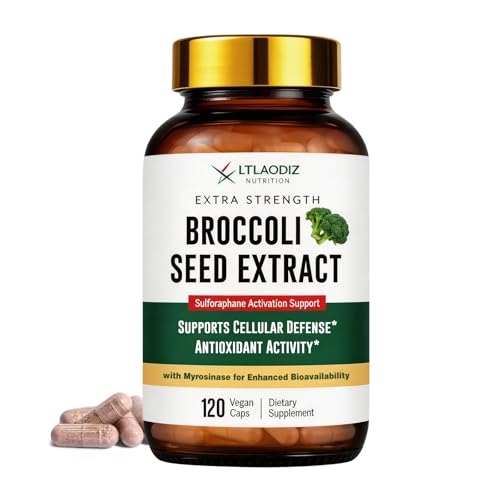
For anyone eating broccoli specifically for sulforaphane, the research points to a short list of practical choices: steam broccoli florets for roughly 1 to 3 minutes rather than boiling or microwaving them, avoid steaming until fully soft, chew thoroughly to maximize the myrosinase reaction during eating, and if the broccoli was fully cooked without a raw myrosinase source, pair it with mustard seed, radish, or another raw cruciferous food at the same meal. None of this applies to sulforaphane supplements that use stabilized glucoraphanin with added myrosinase, which are designed to bypass this cooking-dependent chemistry entirely.
A Note on the Evidence
This article summarizes food science research on sulforaphane formation, not a clinical outcomes trial. It is informational, not medical or dietary advice for any specific health condition.
Frequently Asked Questions
Is steamed broccoli better than raw broccoli for sulforaphane?
Brief steaming (1 to 3 minutes) can outperform raw broccoli because it inactivates the heat-sensitive cofactor that would otherwise redirect the reaction toward inactive sulforaphane nitrile, while myrosinase itself stays active long enough to still work [1]. Steaming beyond that window reduces sulforaphane formation compared to raw or briefly steamed broccoli [2].
Does boiling broccoli destroy all the sulforaphane?
Boiling briefly raises sulforaphane yield and then reduces it, all within about a minute, which limits how much sulforaphane can form, though it isn’t necessarily zero depending on exact timing [1].
Can I still get sulforaphane from broccoli I cooked too long?
Pairing fully cooked broccoli with a raw myrosinase source, such as mustard powder, radish, or arugula, can restore sulforaphane formation and has been shown to raise blood and urine sulforaphane levels compared to eating the cooked broccoli alone [3].
Does this apply to sulforaphane supplements too?
Not in the same way. Supplements that combine stabilized glucoraphanin with active myrosinase (or pre-formed sulforaphane) are designed to sidestep this cooking-dependent chemistry, which is a different bioavailability question than fresh broccoli preparation.

References
- Wang GC et al. Impact of thermal processing on sulforaphane yield from broccoli (Brassica oleracea L. ssp. italica). Journal of Agricultural and Food Chemistry (2012). PMID 22471240
- Sarvan I et al. Sulforaphane formation and bioaccessibility are more affected by steaming time than meal composition during in vitro digestion of broccoli. Food Chemistry (2016). PMID 27507513
- Cramer JM, Jeffery EH. Sulforaphane absorption and excretion following ingestion of a semi-purified broccoli powder rich in glucoraphanin and broccoli sprouts in healthy men. Nutrition and Cancer (2011). PMID 21240766
These statements have not been evaluated by the Food and Drug Administration. This information is not intended to diagnose, treat, cure, or prevent any disease. Content is for informational purposes only and is not medical advice; consult a qualified healthcare provider before starting any supplement. As an Amazon Associate we earn from qualifying purchases.
