Sulforaphane supplements range from under ten dollars to well over sixty dollars a bottle, but the sticker price on the front of the label tells you almost nothing about what you’re actually paying for. Two products can cost the same and differ by tenfold in the amount of active compound delivered per serving, because the market uses inconsistent labeling conventions and inconsistent forms of the ingredient.
This article walks through how to convert any sulforaphane or broccoli sprout product’s listing into a comparable cost-per-milligram figure, what factors legitimately drive price differences between brands, and where corners tend to get cut. It does not name or rank specific commercial products, since prices and formulations change constantly, but it gives you the framework to do that comparison yourself with whatever bottle is in front of you.
Key Takeaways
- Compare products by cost per milligram of active sulforaphane (or glucoraphanin with a stated conversion yield), never by price per bottle alone.
- Labels that report only ‘extract weight’ or ‘broccoli powder’ without a milligram breakdown are not meaningfully comparable to labels that specify active content.
- Some price premiums reflect real costs: sprout-sourcing, myrosinase-pairing delivery systems, third-party potency testing, and GMP manufacturing.
- A cheaper, well-disclosed product can be better value than an expensive, vaguely-labeled one.
- When in doubt, ask the manufacturer for a certificate of analysis (COA) rather than relying on marketing language.
Why Sulforaphane Pricing Is Hard to Compare at a Glance
The core problem is that sulforaphane products are not standardized in how they report content. Some labels state milligrams of sulforaphane directly. Others state milligrams of glucoraphanin, the stable precursor compound that must be converted into sulforaphane by the enzyme myrosinase before it becomes biologically active.[1] Still others state total extract weight or ‘sprout powder’ weight without specifying either figure, which makes the label essentially uninformative for comparison purposes.
Because glucoraphanin-to-sulforaphane conversion is not 1:1 and depends on whether active myrosinase is present in the product, a supplement listing ‘200 mg of broccoli sprout extract’ could deliver anywhere from a trivial amount of active sulforaphane to a clinically relevant dose, depending entirely on formulation. Comparing bottles by price alone, or even by extract weight alone, without knowing which of these three metrics is being reported, is not a meaningful comparison.

The Correct Formula: True Cost Per Milligram of Active Sulforaphane
To compare products fairly, calculate: (price per bottle) divided by (number of servings per bottle) divided by (milligrams of active or actively-yielding sulforaphane per serving), giving you a cost-per-serving and cost-per-milligram figure. If a label only states glucoraphanin content, you need an additional data point: either a stated conversion yield (some manufacturers disclose this, many do not) or an assumption that unconverted glucoraphanin without added myrosinase may deliver little to no active sulforaphane if your gut flora and food-derived myrosinase intake are not reliably converting it.[2]
This is why two products priced identically per bottle can differ by 5 to 10x in real cost-per-milligram of active compound. A cheaper bottle with a stabilized, myrosinase-paired sulforaphane delivery system and a transparent milligram-per-serving disclosure can be a better value than an expensive bottle listing only ‘broccoli extract’ with no active-compound figure at all.
When a label is ambiguous, the most reliable move is to contact the manufacturer directly and ask for the certificate of analysis (COA), which should state actual sulforaphane content or glucoraphanin content with a defined conversion method. A company unwilling to provide this is itself informative.
What Legitimately Drives Price Differences Between Brands
Several factors affect production cost and, reasonably, retail price. Sprout-derived extracts require careful, time-sensitive processing because sulforaphane and myrosinase are both perishable once sprouts are harvested; poor handling degrades potency, so tighter quality control and cold-chain handling cost more. Standardized extracts that guarantee a specific sulforaphane or glucoraphanin content per batch (via third-party testing) also cost more to produce than uncharacterized ‘broccoli powder’ fillers.

Some products pair a glucoraphanin source with an isolated, active myrosinase enzyme source (often from mustard seed) in a two-part capsule or blister system designed to keep the two separate until ingestion, since pre-mixing them in a single capsule during manufacturing and storage would cause premature, uncontrolled conversion. This delivery engineering adds real cost. Third-party testing (for identity, potency, heavy metals, and microbial contamination) and GMP-certified manufacturing also add cost that a bargain-bin product may have skipped.
None of this means the most expensive product is automatically best, only that some price premiums correspond to verifiable manufacturing differences, and some do not. The way to tell the difference is the milligram-per-dollar math above, not the price tag or marketing copy alone.
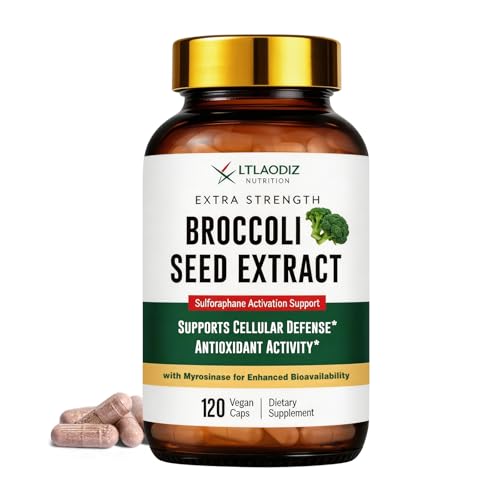
The per-milligram math is easier to follow against real labels. We have broken down individual products:
Red Flags That Signal Poor Value Regardless of Price
Watch for labels that list only ‘broccoli sprout extract’ or ‘broccoli seed extract’ with a total milligram weight and no breakdown of active sulforaphane or glucoraphanin content; this is the single most common way products obscure low potency. Also watch for extracts sourced from mature broccoli rather than sprouts, since sprouts contain substantially higher glucoraphanin concentrations than the mature vegetable, and a product that doesn’t specify sprout-sourcing may be using cheaper, lower-potency mature-plant material.[3]
Proprietary blends that combine sulforaphane-related ingredients with several unrelated ‘superfood’ powders under one combined weight are another common way to make a product look more substantial than its actual active-ingredient content justifies. If you cannot find the actual sulforaphane or glucoraphanin dose in milligrams anywhere on the label or the company’s website, treat that as a genuine gap in the information you need to judge value, not a minor omission.
Practical Steps for Comparing Products Yourself
Start by pulling the label or product page for each product you’re considering and recording three numbers: price, servings per container, and milligrams of active sulforaphane (or glucoraphanin plus stated conversion yield) per serving. Divide price by servings to get cost per serving, then divide cost per serving by milligrams to get cost per milligram. Line these up side by side; the differences are often larger than the sticker prices suggest.
If a company does not disclose a milligram figure for the active compound, treat that product as not yet comparable rather than assuming a middle-of-the-road value, and consider emailing customer support to ask directly. Reputable manufacturers in this category are generally willing to share a COA or a direct answer.
🛒 Where to Buy Sulforaphane
- Nutramax Laboratories Avmacol Regular Strength
tablets, 2 tablets daily — Sulforaphane-producing supplement used in human clinical trials; uses a glucoraphanin + active myrosinase Sulforaphane Production System - Swanson Sulforaphane Broccoli Sprout Extract
capsules, 1 capsule (400 mcg) daily — Budget-friendly option standardized to 0.4% sulforaphane from BroccoPhane concentrate - Source Naturals Broccoli Sprouts Extract
tablets, 1 tablet daily — Delivers 2,000 mcg sulforaphane per serving from freshly germinated broccoli sprouts - Nova Nutritions Broccoli Sprout Extract 1000mg
capsules, 1 capsule daily — Broccoli sprout extract; entry-level price point
As an Amazon Associate we earn from qualifying purchases. Sulforaphane quality depends on conversion, not price. Prefer a product that supplies active myrosinase or pre-converted stabilized sulforaphane rather than glucoraphanin alone, and look for a batch-specific certificate of analysis stating actual glucoraphanin or sulforaphane content, since a label that headlines sulforaphane while the supplement facts list only broccoli sprout extract gives you no way to verify potency.

A Note on the Evidence
This comparison framework is informational, not medical advice, and does not endorse or rank any specific brand or product. Sulforaphane and broccoli sprout extract are not FDA-evaluated as drugs; some users report GI upset at higher doses, high cruciferous intake may have a mild goitrogenic effect relevant to thyroid conditions, and sulforaphane may interact with certain chemotherapy regimens, so anyone in active cancer treatment should consult their oncologist before use.
Frequently Asked Questions
Is a higher price always a sign of a better sulforaphane supplement?
No. Price alone doesn’t indicate potency or quality. Some higher-priced products do carry real added costs like standardized testing or myrosinase-pairing delivery systems, but others are simply priced higher with no corresponding increase in active sulforaphane content. The only reliable comparison is cost per milligram of active compound, calculated from disclosed label data.
What's the difference between glucoraphanin and sulforaphane on a label, and why does it matter for price comparison?
Glucoraphanin is the stable, inactive precursor found in broccoli and broccoli sprouts; sulforaphane is the active compound formed when glucoraphanin is converted by the enzyme myrosinase. A product listing glucoraphanin content isn’t automatically delivering that same amount of active sulforaphane, so comparing a glucoraphanin-labeled product to a sulforaphane-labeled product on price per milligram without accounting for conversion is not an apples-to-apples comparison.
Why do some sulforaphane supplements come in two-part capsules or separate compartments?
This design keeps a glucoraphanin source and an active myrosinase enzyme source physically separated until the moment of ingestion, preventing premature conversion during manufacturing and storage. This delivery engineering is one of the legitimate cost drivers behind higher-priced products, since it requires more complex formulation and packaging than a single powder blend.

Are broccoli sprout extracts always more potent than mature broccoli extracts?
Broccoli sprouts generally contain substantially higher glucoraphanin concentrations than the mature vegetable, which is why most reputable supplements are sprout-derived rather than mature-plant derived. A product that doesn’t specify its plant source or growth stage may be using cheaper, lower-potency material, which is a red flag worth checking on the label or with the manufacturer.
Should I be cautious about very cheap sulforaphane products?
Not automatically, but a very low price combined with a vague label (no milligram disclosure, generic ‘broccoli extract’ wording, no mention of sprout sourcing or third-party testing) is a common combination for low-value products. Run the cost-per-milligram math where possible, and treat missing disclosure as a gap in the information rather than assuming the product is fine.
Do higher-dose products always cost proportionally more?
Not necessarily. Because manufacturing, testing, and packaging carry fixed costs independent of dose, cost per milligram sometimes improves at higher doses per serving and sometimes doesn’t, depending on the brand’s margin structure. This is exactly why calculating cost per milligram for each specific product is more useful than assuming any general rule about dose and price scales together.
References
- Fahey JW et al. Sulforaphane bioavailability from glucoraphanin-rich broccoli: control by active endogenous myrosinase. PLoS One (2015). PMID 26524341
- Fahey JW et al. Protection of humans by plant glucosinolates: efficiency of conversion of glucosinolates to isothiocyanates by the gastrointestinal microflora. Cancer Prevention Research (2012). PMID 22318753
- Fahey JW et al. Broccoli sprouts: an exceptionally rich source of inducers of enzymes that protect against chemical carcinogens. Proceedings of the National Academy of Sciences (1997). PMID 9294217
These statements have not been evaluated by the Food and Drug Administration. This information is not intended to diagnose, treat, cure, or prevent any disease. Content is for informational purposes only and is not medical advice; consult a qualified healthcare provider before starting any supplement. As an Amazon Associate we earn from qualifying purchases.
