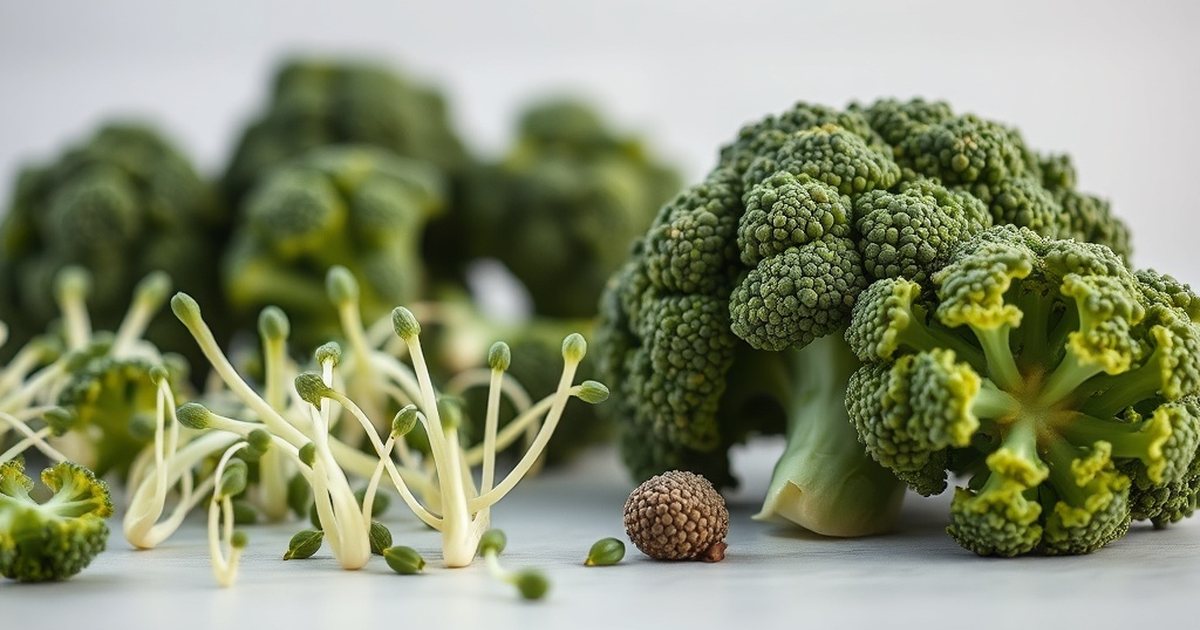
Sulforaphane is an isothiocyanate compound formed when glucoraphanin, a compound naturally present in broccoli and especially concentrated in broccoli sprouts, is converted by the enzyme myrosinase. This conversion happens when the plant tissue is chewed, chopped, or otherwise damaged, releasing myrosinase to act on glucoraphanin. Sulforaphane is one of the most extensively studied natural activators of a cellular pathway called Nrf2, which governs how cells respond to oxidative and chemical stress.
Understanding the Nrf2 pathway helps explain why sulforaphane is discussed so often in the context of cellular defense rather than as a direct antioxidant itself. Rather than neutralizing free radicals on contact the way vitamin C or vitamin E might, sulforaphane works upstream, prompting the body to ramp up its own production of protective enzymes. This article walks through the mechanism plainly, notes where the evidence is strong versus early-stage, and avoids overstating what has and hasn’t been shown in humans.
Key Takeaways
- Sulforaphane forms when glucoraphanin in broccoli and broccoli sprouts is converted by the enzyme myrosinase, typically triggered by chewing, chopping, or crushing the plant.
- Sulforaphane activates Nrf2 indirectly, by modifying the Keap1 protein that normally keeps Nrf2 inactive, rather than by acting as a direct antioxidant itself.
- Once active, Nrf2 turns on a coordinated set of genes for phase II detoxification and antioxidant enzymes, a broader and slower response than a direct free-radical reaction.
- Early cell research shows sulforaphane’s effects on antioxidant capacity and mitochondrial maintenance are time-dependent, not fixed [1].
- The evidence cited here is narrow and mechanism-focused; it does not establish treatment claims for any specific disease.
From Broccoli Sprout to Active Compound: The Glucoraphanin-Myrosinase Reaction
Glucoraphanin itself is biologically inert. It is a glucosinolate, a sulfur-containing storage compound sitting in plant cells separately from the enzyme myrosinase. When a broccoli sprout or broccoli floret is chewed, cut, or crushed, cell walls rupture and glucoraphanin comes into contact with myrosinase for the first time. This enzymatic reaction cleaves glucoraphanin into sulforaphane, which is the form the body actually absorbs and uses.
Because this conversion depends on an intact, active enzyme, factors that damage or inactivate myrosinase before it has a chance to act, such as extended high-heat cooking, can reduce how much sulforaphane a person actually receives from a given amount of glucoraphanin, even if the raw glucoraphanin content of the food is unchanged. This is a preparation and bioavailability detail worth understanding on its own, separate from what sulforaphane does once it is formed and absorbed.

What Nrf2 Is and Why It Matters
Nrf2 (nuclear factor erythroid 2-related factor 2) is a transcription factor, a protein that controls whether certain genes are turned on or off. Under normal, low-stress conditions, Nrf2 is kept inactive in the cell’s cytoplasm, bound to a partner protein called Keap1 that targets it for degradation. This keeps the antioxidant response pathway quiet when it isn’t needed.
When a cell encounters oxidative or electrophilic stress, or when it is exposed to certain plant-derived compounds like sulforaphane, the Keap1-Nrf2 interaction is disrupted. Nrf2 is then able to escape degradation, move into the cell’s nucleus, and bind to DNA sequences known as antioxidant response elements (AREs). This binding switches on a coordinated set of genes rather than a single one, which is what gives the Nrf2 pathway its broad, systemic character.
How Sulforaphane Activates Nrf2
Sulforaphane is classified as an electrophile, a molecule that reacts with specific reactive cysteine residues on the Keap1 protein. This reaction modifies Keap1’s structure in a way that prevents it from continuing to tag Nrf2 for destruction. The practical effect is that more Nrf2 accumulates, translocates to the nucleus, and activates its target genes, even though sulforaphane itself is not directly scavenging free radicals the way a conventional antioxidant does.
This indirect mechanism is part of why sulforaphane is often described as inducing the body’s endogenous antioxidant response rather than acting as an antioxidant on its own. Downstream of Nrf2 activation, cells increase the expression of phase II detoxification enzymes and antioxidant enzymes, including glutathione S-transferases, NAD(P)H quinone oxidoreductase 1 (NQO1), and heme oxygenase-1, among others. These enzymes work over hours to days, in contrast to a direct antioxidant reaction that happens on contact.

Beyond Antioxidant Enzymes: Mitochondrial and Cellular Housekeeping Effects
Research into Nrf2-activating compounds has extended into how they affect mitochondrial health, since mitochondria are both a major source of reactive oxygen species and a target of oxidative damage. In a study examining sulforaphane alongside two other compounds, urolithin A and ZLN005, in muscle cells, sulforaphane produced time-dependent changes in antioxidant capacity, mitophagy (the clearance of damaged mitochondria), and mitochondrial biogenesis (the formation of new mitochondria) [1]. This suggests sulforaphane’s downstream effects may extend past enzyme induction into how cells maintain and renew their mitochondrial pool over time.
Separately, mitochondrial function and oxidative stress pathways have been explored as a therapeutic target in more severe, acute conditions. A 2026 review on acute pancreatitis discussed mitochondria as a strategic therapeutic avenue in that disease context [2]. It’s worth being direct about the limits of this citation: this reference concerns mitochondrial-targeted therapeutic strategy in acute pancreatitis broadly, not a sulforaphane clinical trial, and should not be read as evidence that sulforaphane treats or prevents pancreatitis. It is included here only because it reflects the same underlying interest in mitochondrial and oxidative stress biology that connects to the Nrf2 mechanism discussed throughout this article.
Why Timing and Dose Appear to Matter
One notable feature of the muscle cell research is that the effects were time-dependent [1], meaning the compound’s impact on antioxidant capacity, mitophagy, and mitochondrial biogenesis was not static but changed across the observation period. This is consistent with how the Nrf2 pathway is understood to work more broadly: it is a regulated, transient response rather than a switch that simply stays on. Cells upregulate protective enzymes for a period, and that response is expected to rise and fall rather than persist indefinitely at a fixed level.
This matters practically because it means a single mechanistic finding, such as increased enzyme expression at one point in time, doesn’t automatically tell you what a chronic daily-use pattern looks like, or what an optimal dose or interval is for a person taking a broccoli sprout extract or supplement. Much of the detailed dose-response and timing data in humans, as opposed to cell models, remains an area where the evidence base is still developing.
What the Evidence Does and Doesn't Establish
The core mechanism, glucoraphanin converting to sulforaphane via myrosinase, and sulforaphane then disrupting Keap1 to allow Nrf2 activation, is well established in mechanistic and cell-based research. The specific findings cited in this article come from a cell-based muscle study [1] and a disease-focused mitochondrial review [2], and it’s important to be honest that these two references, on their own, are a narrow slice of a much larger literature on sulforaphane and Nrf2, most of which sits outside what is cited here.
It would be inaccurate to claim, based on these two references alone, that sulforaphane reverses aging, treats a specific disease, or produces a guaranteed level of antioxidant protection in every person who takes it. Individual variation in myrosinase activity, gut microbiome composition (which can also help convert glucoraphanin), and baseline Nrf2 pathway activity likely all influence how any one person responds.
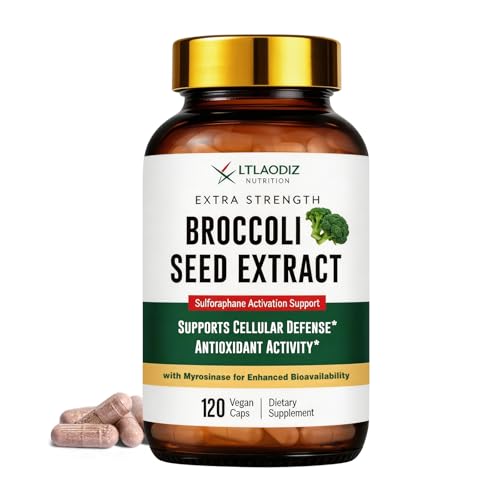
🛒 Where to Buy Sulforaphane
- Nutramax Laboratories Avmacol Regular Strength
tablets, 2 tablets daily — Sulforaphane-producing supplement used in human clinical trials; uses a glucoraphanin + active myrosinase Sulforaphane Production System - Swanson Sulforaphane Broccoli Sprout Extract
capsules, 1 capsule (400 mcg) daily — Budget-friendly option standardized to 0.4% sulforaphane from BroccoPhane concentrate - Source Naturals Broccoli Sprouts Extract
tablets, 1 tablet daily — Delivers 2,000 mcg sulforaphane per serving from freshly germinated broccoli sprouts - Nova Nutritions Broccoli Sprout Extract 1000mg
capsules, 1 capsule daily — Broccoli sprout extract; entry-level price point
As an Amazon Associate we earn from qualifying purchases. Sulforaphane quality depends on conversion, not price. Prefer a product that supplies active myrosinase or pre-converted stabilized sulforaphane rather than glucoraphanin alone, and look for a batch-specific certificate of analysis stating actual glucoraphanin or sulforaphane content, since a label that headlines sulforaphane while the supplement facts list only broccoli sprout extract gives you no way to verify potency.

A Note on the Evidence
This article reflects a narrow, cited slice of the sulforaphane and Nrf2 literature and is informational only, not medical advice; sulforaphane may cause GI upset in some people, high cruciferous intake may mildly affect thyroid function in sensitive individuals, and anyone in active cancer treatment or on other medications should consult their oncologist or physician before using sulforaphane or broccoli sprout extract.
Frequently Asked Questions
What is the Nrf2 pathway in simple terms?
Nrf2 is a protein that, once activated, turns on a group of genes responsible for making the body’s own antioxidant and detoxification enzymes. It is normally held inactive, and compounds like sulforaphane can trigger its release so it can do this job.
Does sulforaphane act as an antioxidant directly?
Not in the traditional sense. Sulforaphane reacts with the Keap1 protein to free up Nrf2, which then activates genes for antioxidant enzymes; the antioxidant effect is downstream and enzyme-driven rather than sulforaphane itself neutralizing free radicals on contact.
How does broccoli turn into sulforaphane in the body?
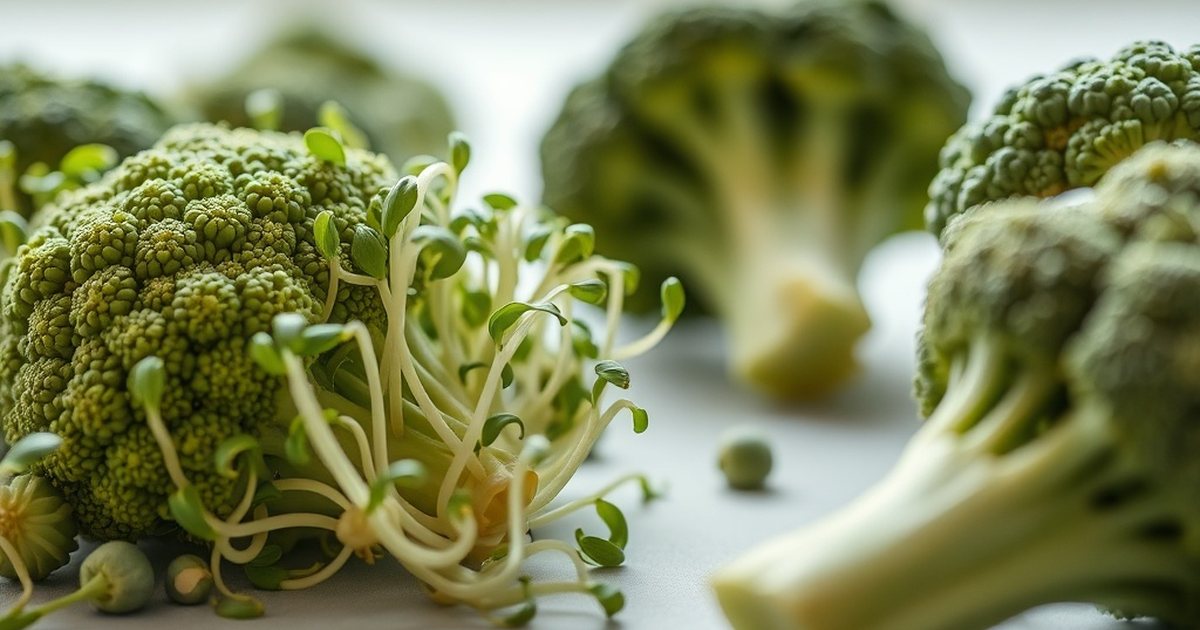
Broccoli and broccoli sprouts contain glucoraphanin, an inactive precursor. Chewing or processing the plant releases the enzyme myrosinase, which converts glucoraphanin into active sulforaphane.

Does cooking destroy sulforaphane potential?
Extended high-heat cooking can inactivate myrosinase, the enzyme needed for the glucoraphanin-to-sulforaphane conversion, which may reduce how much active sulforaphane is available from a cooked dish compared to raw or lightly prepared broccoli sprouts.
Is there research on sulforaphane and mitochondria?
Yes. A cell-based study found that sulforaphane produced time-dependent changes in antioxidant capacity, mitophagy, and mitochondrial biogenesis in muscle cells [1], suggesting effects that extend into mitochondrial maintenance, though this is early-stage cell research rather than a human clinical outcome.
Is sulforaphane FDA-approved or a treatment for any condition?
No. Sulforaphane and broccoli sprout extract are not FDA-evaluated as drugs and are not approved treatments for any disease. The research discussed here concerns cellular mechanisms, not clinical treatment claims.
References
- Moradi N et al. Sulforaphane, Urolithin A, and ZLN005 induce time-dependent alterations in antioxidant capacity, mitophagy, and mitochondrial biogenesis in muscle cells. Sports medicine and health science (2025). PMID 39649792
- Chooklin S et al. Beyond Supportive Care: Mitochondria as a Strategic Therapeutic Avenue in Acute Pancreatitis. Digestive diseases and sciences (2026). PMID 41854947
These statements have not been evaluated by the Food and Drug Administration. This information is not intended to diagnose, treat, cure, or prevent any disease. Content is for informational purposes only and is not medical advice; consult a qualified healthcare provider before starting any supplement. As an Amazon Associate we earn from qualifying purchases.
