Sulforaphane is an isothiocyanate compound formed when glucoraphanin, a compound naturally present in broccoli and broccoli sprouts, is converted by the enzyme myrosinase. Once formed, sulforaphane is one of the most extensively studied natural activators of the Nrf2 pathway, a cellular signaling system that upregulates the body’s own antioxidant and phase II detoxification enzymes. Because Nrf2 signaling declines with age and oxidative stress is a recurring theme in aging biology, sulforaphane has drawn interest as a candidate for supporting healthy aging.
This article looks specifically at where sulforaphane research intersects with aging and longevity science: what the mechanistic and preclinical evidence shows, and where the gaps are. It is worth being direct about this upfront: much of the strongest evidence comes from cell and animal models, not large human longevity trials. This is informational content, not medical advice, and it is not a claim that sulforaphane extends lifespan in humans.
Key Takeaways
- Sulforaphane activates the Nrf2 pathway, which upregulates antioxidant and phase II detoxification enzymes that decline with age [1]
- Preclinical research links sulforaphane and Nrf2 signaling to autophagy and protein quality-control processes relevant to cellular aging [2][3]
- The clearest tissue-specific signal is in skin aging, but it comes from a mouse study rather than human trials [4]
- Reductive stress research shows that antioxidant pathway activation isn’t simply ‘more is better,’ underscoring that Nrf2 biology is nuanced [5]
- No current evidence shows sulforaphane extends human lifespan; the field is still developing this connection [6]
The Nrf2 Pathway and Why It Matters for Aging
Nrf2 (nuclear factor erythroid 2-related factor 2) is a transcription factor that, when activated, turns on genes responsible for producing antioxidant enzymes and phase II detoxification proteins. Sulforaphane activates Nrf2 signaling by disrupting its interaction with Keap1, a protein that normally keeps Nrf2 inactive, allowing Nrf2 to move into the cell nucleus and switch on its target genes.
This pathway is relevant to aging because oxidative stress, an imbalance between reactive oxygen species and the cell’s ability to neutralize them, is thought to contribute to age-related tissue damage. Research has shown that sulforaphane can reactivate Nrf2/ARE/Prdx6 antioxidant activity that otherwise declines during aging and oxidative stress exposure [1]. A dedicated review of sulforaphane’s role in aging and neurodegeneration lays out this mechanistic rationale in more detail, while also noting that translating it into demonstrated human longevity benefit remains an open question [6].

Cellular Housekeeping: Autophagy and Protein Quality Control
Beyond antioxidant enzyme production, aging research increasingly focuses on how cells clear out damaged proteins and organelles, a process broadly called autophagy. Impaired autophagy is linked to the accumulation of cellular damage over time, which is one of several proposed contributors to aging phenotypes.
Sulforaphane has been shown to activate a lysosome-dependent transcriptional program that helps cells mitigate oxidative stress, a pathway connected to autophagy function [2]. Separately, Nrf2 itself has been shown to modulate chaperone-mediated autophagy through regulation of LAMP2A, a receptor protein involved in selectively degrading damaged proteins [3]. Together, these findings point to a mechanistic link between Nrf2 activation and the cell’s protein quality-control machinery, one of the pathways aging researchers are interested in, though this connection is still being mapped out at the cellular level rather than confirmed as a driver of lifespan extension.
Skin Aging: A Tissue-Specific Signal From Mice
Skin is one of the more accessible tissues for studying visible aging effects, and it’s an area where sulforaphane has specific supporting data. Dietary supplementation with sulforaphane has been shown to ameliorate skin aging in mice through activation of the Keap1-Nrf2 pathway [4]. This is a useful data point because it connects the Nrf2 mechanism to an aging-relevant outcome, but it’s worth noting the scope: skin aging is one tissue-specific readout, not a proxy for whole-body longevity or lifespan.
Muscle and Reductive Stress: A Reminder That More Antioxidant Activity Isn't Always Better
A useful counterpoint in this research area is the concept of reductive stress, essentially, an excess of antioxidant activity that can itself impair cellular function. Research on reductive stress has shown it can impair myogenic differentiation, the process by which muscle cells mature [5]. This finding doesn’t directly involve sulforaphane, but it is relevant context: aging biology isn’t simply a matter of maximizing antioxidant signaling. Pathways like Nrf2 appear to have an optimal range rather than a ‘more is always better’ relationship, which is a reason to be cautious about assuming that stronger or more frequent Nrf2 activation is automatically better for long-term health.

What the Evidence Does and Doesn't Support
Taken together, the current evidence base supports a plausible mechanistic story: sulforaphane activates Nrf2 signaling, which in turn supports antioxidant enzyme production, has links to autophagy and protein quality control [2][3], reactivates age-diminished antioxidant activity in preclinical models [1], and has shown tissue-specific benefit in skin aging in a mouse supplementation study [4].
What the evidence does not yet show is that sulforaphane extends human lifespan or reliably slows systemic aging. Much of the foundational work is in cell culture and animal models, and reviews of the field frame sulforaphane’s relevance to aging and neurodegeneration as an active area of investigation rather than a settled conclusion [6]. Readers should treat sulforaphane as a compound with a credible, well-characterized mechanism worth watching in aging research, not as a proven longevity intervention.
🛒 Where to Buy Sulforaphane
- Nutramax Laboratories Avmacol Regular Strength
tablets, 2 tablets daily — Sulforaphane-producing supplement used in human clinical trials; uses a glucoraphanin + active myrosinase Sulforaphane Production System - Swanson Sulforaphane Broccoli Sprout Extract
capsules, 1 capsule (400 mcg) daily — Budget-friendly option standardized to 0.4% sulforaphane from BroccoPhane concentrate - Source Naturals Broccoli Sprouts Extract
tablets, 1 tablet daily — Delivers 2,000 mcg sulforaphane per serving from freshly germinated broccoli sprouts - Nova Nutritions Broccoli Sprout Extract 1000mg
capsules, 1 capsule daily — Broccoli sprout extract; entry-level price point
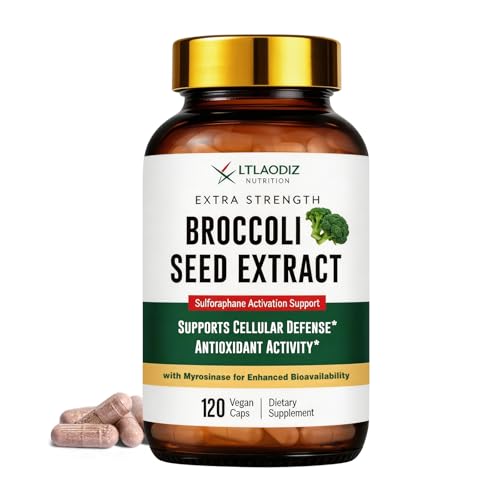
As an Amazon Associate we earn from qualifying purchases. Sulforaphane quality depends on conversion, not price. Prefer a product that supplies active myrosinase or pre-converted stabilized sulforaphane rather than glucoraphanin alone, and look for a batch-specific certificate of analysis stating actual glucoraphanin or sulforaphane content, since a label that headlines sulforaphane while the supplement facts list only broccoli sprout extract gives you no way to verify potency.
A Note on the Evidence
Most of the aging-related evidence for sulforaphane comes from cell and animal studies rather than long-term human trials, so claims about longevity should be read as mechanistic and preliminary. Sulforaphane and broccoli sprout extract are generally well tolerated but may cause GI upset in some users, very high cruciferous intake may have a mild goitrogenic effect relevant to thyroid conditions, and sulforaphane may interact with certain chemotherapy regimens, so anyone in active cancer treatment should consult their oncologist before use; this is informational content, not medical advice.
Frequently Asked Questions
Does sulforaphane slow aging?
There is no direct evidence that sulforaphane slows human aging or extends lifespan. What exists is mechanistic and preclinical evidence that it activates the Nrf2 pathway, which is involved in antioxidant defense and cellular stress responses relevant to aging biology [6].
How does sulforaphane relate to the Nrf2 pathway?
Sulforaphane disrupts the Keap1-Nrf2 interaction, allowing Nrf2 to activate genes for antioxidant and detoxification enzymes, a mechanism shown to reactivate age-diminished antioxidant activity in preclinical research [1].
Is there human evidence for sulforaphane and aging?
The clearest tissue-specific data point is in skin, where dietary sulforaphane supplementation was shown in mice to ameliorate skin aging via Keap1-Nrf2 pathway activation [4]. Broader systemic longevity evidence in humans is limited.

Can too much antioxidant activation be a problem?
Research on reductive stress suggests that excess antioxidant activity can impair processes like muscle cell differentiation, indicating that pathways like Nrf2 likely have an optimal range rather than benefiting from unlimited activation [5].
Is sulforaphane linked to cellular cleanup processes like autophagy?
Yes, at the mechanistic level. Sulforaphane has been shown to activate a lysosome-dependent transcriptional program tied to oxidative stress mitigation, and Nrf2 itself regulates chaperone-mediated autophagy through LAMP2A [2][3].
Should I take sulforaphane specifically for longevity?
The current evidence supports a plausible mechanism, not a proven longevity outcome. Sulforaphane and broccoli sprout extract are not FDA-evaluated as drugs; this information should not be treated as medical advice or a guarantee of anti-aging effects.
References
- Kubo E et al. Sulforaphane reactivates cellular antioxidant defense by inducing Nrf2/ARE/Prdx6 activity during aging and oxidative stress. Scientific reports (2017). PMID 29074861
- Li D et al. Sulforaphane Activates a lysosome-dependent transcriptional program to mitigate oxidative stress. Autophagy (2021). PMID 32138578
- Pajares M et al. Transcription factor NFE2L2/NRF2 modulates chaperone-mediated autophagy through the regulation of LAMP2A. Autophagy (2018). PMID 29950142
- Petkovic M et al. Dietary supplementation with sulforaphane ameliorates skin aging through activation of the Keap1-Nrf2 pathway. The Journal of nutritional biochemistry (2021). PMID 34271100
- Rajasekaran NS et al. Reductive stress impairs myogenic differentiation. Redox biology (2020). PMID 32361680
- Santín-Márquez R et al. Sulforaphane – role in aging and neurodegeneration. GeroScience (2019). PMID 30941620
These statements have not been evaluated by the Food and Drug Administration. This information is not intended to diagnose, treat, cure, or prevent any disease. Content is for informational purposes only and is not medical advice; consult a qualified healthcare provider before starting any supplement. As an Amazon Associate we earn from qualifying purchases.
