Sulforaphane, the isothiocyanate compound formed when glucoraphanin in broccoli and broccoli sprouts is converted by the enzyme myrosinase, has drawn research interest partly because of its effects on cellular pathways that are also relevant to cancer biology. It activates Nrf2, a transcription factor that upregulates the body’s own antioxidant and phase II detoxification enzymes, and it has been studied for additional mechanisms including anti-inflammatory activity and epigenetic modulation.
That same mechanistic breadth is exactly why sulforaphane deserves a careful, honest conversation rather than a blanket recommendation for anyone undergoing chemotherapy. Some of the cellular pathways sulforaphane influences are the same pathways certain cancer therapies rely on, which means overlap could in theory be helpful, neutral, or counterproductive depending on the drug, the dose, and the individual. This article lays out what is understood, what is not, and why oncologists need to be part of the decision.
Key Takeaways
- Sulforaphane’s Nrf2-driven antioxidant activity and its effects on cell signaling and epigenetic pathways are why it has been studied in cancer contexts [1] [2]
- Antioxidant boosting is a theoretical reason sulforaphane could blunt the effectiveness of some chemotherapy drugs, though this hasn’t been established through dedicated human interaction trials in this evidence set
- Phytochemicals as a class have been studied for possible interplay with immune checkpoint inhibitor therapy [3], which is relevant given sulforaphane’s own anti-inflammatory activity [4]
- Direct clinical trial evidence on sulforaphane combined with specific chemotherapy regimens in humans is limited; mechanism is not the same as proven clinical effect
- Patients in active cancer treatment should disclose any sulforaphane use, supplement or food-based, to their oncology team before starting
How Sulforaphane Is Thought to Interact with Cancer Biology
Sulforaphane has been studied as a potential adjunct in cancer contexts through several proposed mechanisms, including modulation of cell signaling pathways involved in tumor growth and survival [1]. Reviews of this literature describe effects across multiple stages of cancer development, from initiation to progression, though most of the underlying data comes from cell culture and animal models rather than large human trials [1].
Separately, sulforaphane and related phytochemicals have been examined for their capacity to influence epigenetic regulation, the chemical modifications that control which genes are turned on or off without changing the underlying DNA sequence [2]. Because some cancer therapies also target epigenetic machinery, researchers have looked at whether natural compounds like sulforaphane could complement or interfere with these approaches, an emerging area that includes work on protein complexes such as PRMT5:MEP50 [5].

The Antioxidant Question: Could It Blunt Chemotherapy's Effect?
One of the most discussed theoretical concerns is straightforward: many antioxidants, and sulforaphane’s Nrf2 activation is fundamentally an antioxidant-boosting mechanism, could in principle reduce the oxidative stress that certain chemotherapy drugs use to kill cancer cells. If a supplement strengthens a tumor cell’s own antioxidant defenses at the wrong time, it could theoretically make some treatments less effective, though this remains a mechanistic concern rather than something demonstrated in dedicated human interaction trials within the evidence available here.
This is not a fringe worry among oncologists. It is a standard reason cancer care teams ask patients to disclose all supplements, including seemingly benign food-derived ones like broccoli sprout extract, before and during active treatment. The direction and magnitude of any real-world effect likely depends heavily on the specific chemotherapy regimen, the timing of supplement use relative to treatment cycles, and the dose of sulforaphane involved, none of which can be generalized from mechanism alone.
Immune Checkpoint Inhibitors and Phytochemicals
A newer area of research looks at how plant-derived compounds might intersect with immune checkpoint inhibitor therapies, a class of cancer treatment that works by helping the immune system recognize and attack tumor cells [3]. This line of research treats phytochemicals broadly rather than isolating sulforaphane specifically, and it underscores that immune-modulating supplements and immune-modulating drugs are a combination that requires clinical oversight, not assumption.

Sulforaphane’s own anti-inflammatory profile has been studied directly [4], and inflammation modulation is closely tied to immune function. Because checkpoint inhibitors work by adjusting immune activity, a patient on this class of drug has a plausible reason to flag any immune- or inflammation-modulating supplement, sulforaphane included, to their oncology team before starting it.
Where the Evidence Is Strong, and Where It Is Thin
The mechanistic case for sulforaphane’s relevance to cancer biology is well documented in preclinical and mechanistic literature [1] [2] [5]. What is thin is direct clinical evidence in humans actively undergoing chemotherapy: dedicated trials measuring outcomes, drug levels, or interaction effects when sulforaphane is combined with specific chemotherapy agents in oncology patients are not part of the evidence base available here.
This gap matters. A compound can have a compelling mechanism and still turn out to be neutral, beneficial, or detrimental once tested in the actual clinical scenario, timing, dose, drug combination, and patient population, that patients care about. Absence of large human interaction trials is not reassurance that no interaction exists; it means the question has not been definitively answered either way.
Practical Considerations for Oncology Patients
Anyone in active cancer treatment who is considering sulforaphane, whether from supplements or concentrated broccoli sprout extracts, should raise it with their oncologist before starting, not after. This is standard practice for any supplement during chemotherapy, since even food-derived compounds can affect drug metabolism, immune activity, or the treatment’s own mechanism of action.
Useful information to bring to that conversation includes the specific chemotherapy or immunotherapy regimen being used, the dose and form of sulforaphane under consideration, and the timing relative to treatment cycles. An oncologist or oncology pharmacist is best positioned to weigh these specifics against the patient’s individual treatment plan, something a general article cannot do.
🛒 Where to Buy Sulforaphane
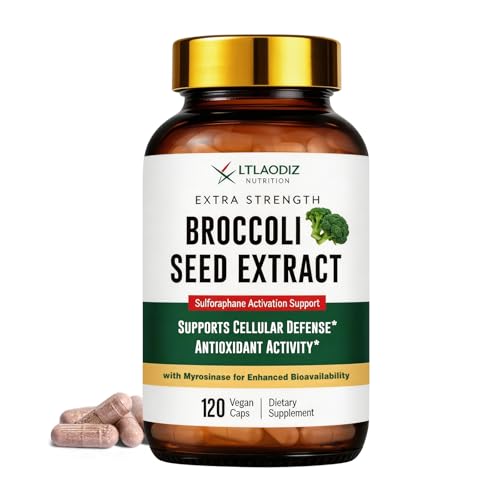
- Nutramax Laboratories Avmacol Regular Strength
tablets, 2 tablets daily — Sulforaphane-producing supplement used in human clinical trials; uses a glucoraphanin + active myrosinase Sulforaphane Production System - Swanson Sulforaphane Broccoli Sprout Extract
capsules, 1 capsule (400 mcg) daily — Budget-friendly option standardized to 0.4% sulforaphane from BroccoPhane concentrate - Source Naturals Broccoli Sprouts Extract
tablets, 1 tablet daily — Delivers 2,000 mcg sulforaphane per serving from freshly germinated broccoli sprouts - Nova Nutritions Broccoli Sprout Extract 1000mg
capsules, 1 capsule daily — Broccoli sprout extract; entry-level price point
As an Amazon Associate we earn from qualifying purchases. Sulforaphane quality depends on conversion, not price. Prefer a product that supplies active myrosinase or pre-converted stabilized sulforaphane rather than glucoraphanin alone, and look for a batch-specific certificate of analysis stating actual glucoraphanin or sulforaphane content, since a label that headlines sulforaphane while the supplement facts list only broccoli sprout extract gives you no way to verify potency.
A Note on the Evidence
This article summarizes mechanistic and early-stage research, not dedicated human clinical trials on sulforaphane combined with specific chemotherapy regimens; sulforaphane and broccoli sprout extract are not FDA-evaluated as drugs. Anyone in active cancer treatment should consult their oncologist before starting sulforaphane in any form, and this content is informational only, not medical advice.

Frequently Asked Questions
Does sulforaphane cure cancer or replace chemotherapy?
No. Sulforaphane is not an approved cancer treatment and should never be used as a substitute for chemotherapy or any prescribed oncology treatment. The mechanistic research on its interaction with cancer-relevant pathways [1] does not establish it as a treatment on its own.
Can sulforaphane make chemotherapy less effective?
This is a plausible theoretical concern because sulforaphane boosts the body’s antioxidant defenses through Nrf2 activation, and some chemotherapy drugs work partly through oxidative stress. Whether this happens in practice, and to what degree, has not been established through dedicated human trials in the evidence reviewed here, which is exactly why oncologist input is important.
Is sulforaphane safe to take with immunotherapy?
Phytochemicals broadly have been studied for potential interplay with immune checkpoint inhibitors [3], and sulforaphane itself has documented anti-inflammatory effects [4]. Because immunotherapy works by modulating immune activity, any supplement that also affects inflammation or immune signaling should be discussed with the treating oncologist first.

Should I stop eating broccoli or broccoli sprouts during chemotherapy?
Whole-food intake and concentrated supplement doses are different questions, and this article does not have evidence specific to typical dietary vegetable consumption. Patients with concerns about diet during treatment, including cruciferous vegetables, should raise it with their oncology team or an oncology dietitian rather than making the call unassisted.
Why does timing relative to chemotherapy cycles matter?
If sulforaphane’s antioxidant or signaling effects do interact with a specific drug’s mechanism, the timing of exposure relative to a treatment cycle could plausibly change whether that interaction matters. This is a reason to give an oncologist the full picture, including when a supplement would be taken, rather than treating it as a fixed daily habit unrelated to the treatment calendar.
Is there any research on sulforaphane in other health contexts, like inflammation?
Yes, separate from cancer-specific research, sulforaphane’s anti-inflammatory activity has been studied directly [4], and it has also come up in research on other conditions such as autism spectrum disorder pathogenesis and interventions. These are distinct research areas from chemotherapy interaction and shouldn’t be conflated with oncology-specific safety data.
References
- Iahtisham-Ul-Haq et al. Sulforaphane as a potential remedy against cancer: Comprehensive mechanistic review. Journal of food biochemistry (2022). PMID 34350614
- Irshad R et al. Natural products in the reprogramming of cancer epigenetics. Toxicology and applied pharmacology (2021). PMID 33631231
- Lee J et al. Phytochemicals in Cancer Immune Checkpoint Inhibitor Therapy. Biomolecules (2021). PMID 34439774
- Treasure K et al. Exploring the anti-inflammatory activity of sulforaphane. Immunology and cell biology (2023). PMID 37650498
- Aba Alkhayl FF et al. Dismantling the epigenetic alliance: Emerging strategies to disrupt the PRMT5:MEP50 complex for cancer therapy. European journal of medicinal chemistry (2025). PMID 40532498
These statements have not been evaluated by the Food and Drug Administration. This information is not intended to diagnose, treat, cure, or prevent any disease. Content is for informational purposes only and is not medical advice; consult a qualified healthcare provider before starting any supplement. As an Amazon Associate we earn from qualifying purchases.
