Sulforaphane is often marketed as a cutting-edge wellness discovery, but the compound has actually been under serious scientific study for over three decades. Its story starts not in a supplement company’s marketing department but in a university laboratory studying how vegetables might help the body defend itself against carcinogens.
Understanding where sulforaphane research came from, and how it moved from bench science to broccoli sprout powders and standardized capsules, helps put today’s products in context. This history also explains why some claims about sulforaphane are grounded in real mechanistic science while others outpace what the evidence actually shows.
Key Takeaways
- Sulforaphane research traces back to Paul Talalay’s lab at Johns Hopkins in the early 1990s, which identified the compound and found broccoli sprouts as a concentrated source.
- The Keap1-Nrf2 pathway explains how sulforaphane works: it triggers the body’s own antioxidant and detox enzyme production rather than acting as a direct antioxidant.
- Sulforaphane only forms when glucoraphanin is converted by the enzyme myrosinase, which cooking can destroy, a key practical detail from the research history.
- Human clinical evidence has expanded well beyond the original cancer-prevention focus, but many trials remain small or short, so confirmed clinical outcomes lag behind the mechanistic science.
- Modern standardized supplements exist largely to solve a problem researchers flagged early on: inconsistent conversion of glucoraphanin into active sulforaphane.
The Johns Hopkins Discovery
The modern story of sulforaphane research is closely tied to the laboratory of Paul Talalay at Johns Hopkins University School of Medicine. In the early 1990s, Talalay’s team was investigating why cruciferous vegetables like broccoli seemed to be associated with lower cancer risk in population studies, and they were trying to isolate the specific compound responsible.
Their work identified sulforaphane as a potent inducer of what are called phase II detoxification enzymes, enzymes that help the body process and clear out potentially harmful compounds, including some carcinogens. The isolation paper appeared in 1992: using quinone reductase induction in cultured cells as the assay, the team purified the active compound from broccoli and elucidated its structure as sulforaphane[1]. This was a significant shift: rather than looking at vegetables as generically healthy, the research pointed to a specific molecule with a specific, testable mechanism.
Talalay and colleagues also discovered that broccoli sprouts, the young seedlings harvested just days after germination, contained substantially higher concentrations of glucoraphanin (sulforaphane’s precursor) than mature broccoli heads. The 1997 report put the gap at 10 to 100 times the level found in the mature plant for three-day-old sprouts of certain cultivars[2] – a large enough difference that it reoriented the field toward sprouts as the practical research material. This finding became the basis for much of the sprout-based research and products that followed.

Unpacking the Nrf2 Mechanism
As research continued through the 1990s and 2000s, scientists worked to explain exactly how sulforaphane triggered this protective enzyme response. The answer turned out to be a cellular signaling pathway called Nrf2 (nuclear factor erythroid 2-related factor 2).
In simple terms, Nrf2 acts like a switch inside cells. Under normal conditions it’s held inactive by a partner protein called Keap1. Sulforaphane interacts with Keap1 in a way that releases Nrf2, allowing it to travel to the cell nucleus and switch on genes responsible for producing antioxidant enzymes and detoxification proteins. Work published in 2002 supplied the direct evidence for this step, showing that inducers such as sulforaphane react with reactive cysteine thiol groups on Keap1, disrupting the Keap1-Nrf2 complex and freeing Nrf2 to activate the antioxidant response element[3]. This is why sulforaphane is often described as working indirectly, it doesn’t act as an antioxidant itself so much as it prompts the body to ramp up its own internal antioxidant machinery.
The discovery of the Keap1-Nrf2 pathway reframed sulforaphane research more broadly. It positioned sulforaphane not just as a cancer-prevention compound but as a molecule of interest across a range of conditions involving oxidative stress and inflammation, which is part of why research interest expanded well beyond the original cancer-focused studies.
From Lab Bench to Broccoli Sprout Extracts
Once researchers established that young broccoli sprouts were unusually rich in glucoraphanin, this created a practical bridge between laboratory findings and consumer products. Standardized broccoli sprout extracts began appearing as a way to deliver a more consistent dose of the sulforaphane precursor than someone would get from eating variable amounts of raw vegetables.
This period also brought attention to a practical wrinkle: sulforaphane isn’t present in meaningful amounts in the plant itself. It’s formed only when the enzyme myrosinase converts glucoraphanin into sulforaphane, and myrosinase is easily destroyed by cooking. This is one reason raw or lightly prepared broccoli and sprouts became the focus of dietary recommendations, and why some supplement formulations pair glucoraphanin with active myrosinase, or try to preserve it, to maximize actual sulforaphane conversion.

Commercial interest grew alongside academic research, and by the 2000s and 2010s, extracts and standardized supplements had moved from niche health food products to a more mainstream category, often marketed on the strength of the original Johns Hopkins mechanistic work even when specific products themselves hadn’t been directly tested in large human trials.
Where Human Research Has Focused
Following the initial mechanistic discoveries, human research on sulforaphane and broccoli sprout extracts has explored several directions, including detoxification enzyme activity, markers of oxidative stress, and various inflammatory conditions. Some of this research has also looked at neurological and metabolic health angles, reflecting how far the field expanded from its cancer-prevention origins.
It’s important to be direct about the state of this evidence: much of the human research on sulforaphane involves small trial sizes, short durations, or surrogate markers (like enzyme activity or blood markers) rather than long-term clinical outcomes. A 2019 review of the field counted over 3,000 publications on sulforaphane, the great majority of them rodent disease models or mechanistic work, against roughly 50 clinical trials – and identified integrating those animal findings with human dosing as an unresolved problem rather than a settled one[4]. Larger, longer, and more definitive human trials are still limited relative to the volume of laboratory and animal research that preceded them. This gap between mechanistic promise and confirmed clinical benefit is a defining feature of where the field currently stands, not a flaw specific to sulforaphane.
The Rise of Standardized Modern Supplements
Today’s sulforaphane and broccoli sprout supplement market reflects lessons learned across this research history. Because raw conversion from glucoraphanin to active sulforaphane depends on myrosinase and can vary significantly between products and even between batches of fresh sprouts, many modern supplements are formulated to standardize glucoraphanin content, myrosinase activity, or both.
This standardization effort is a direct response to a problem researchers identified decades ago: without a reliable conversion step, a product’s label claims about glucoraphanin content don’t guarantee a corresponding amount of actual sulforaphane delivered to the body. Consumers and researchers alike have become more attentive to this distinction as the market has matured.
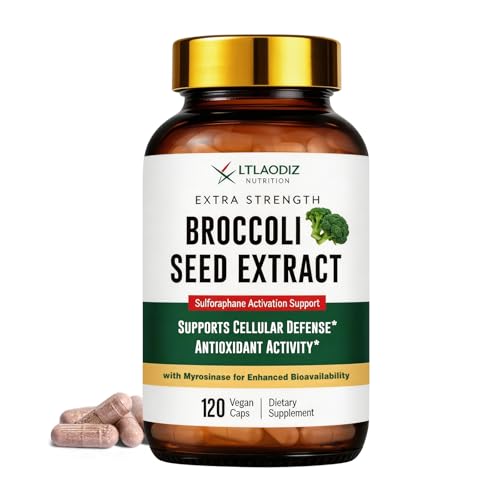
🛒 Where to Buy Sulforaphane
- Nutramax Laboratories Avmacol Regular Strength
tablets, 2 tablets daily — Sulforaphane-producing supplement used in human clinical trials; uses a glucoraphanin + active myrosinase Sulforaphane Production System - Swanson Sulforaphane Broccoli Sprout Extract
capsules, 1 capsule (400 mcg) daily — Budget-friendly option standardized to 0.4% sulforaphane from BroccoPhane concentrate - Source Naturals Broccoli Sprouts Extract
tablets, 1 tablet daily — Delivers 2,000 mcg sulforaphane per serving from freshly germinated broccoli sprouts - Nova Nutritions Broccoli Sprout Extract 1000mg
capsules, 1 capsule daily — Broccoli sprout extract; entry-level price point
As an Amazon Associate we earn from qualifying purchases. Sulforaphane quality depends on conversion, not price. Prefer a product that supplies active myrosinase or pre-converted stabilized sulforaphane rather than glucoraphanin alone, and look for a batch-specific certificate of analysis stating actual glucoraphanin or sulforaphane content, since a label that headlines sulforaphane while the supplement facts list only broccoli sprout extract gives you no way to verify potency.
A Note on the Evidence
This article is informational and not medical advice; much of the human evidence on sulforaphane involves small or short-term studies rather than confirmed long-term clinical outcomes. Sulforaphane and broccoli sprout extract are not FDA-evaluated as drugs, may cause GI upset in some users, and anyone in active cancer treatment or with thyroid conditions should consult their doctor or oncologist before use.
Frequently Asked Questions
Who discovered sulforaphane's health-related properties?
Paul Talalay and colleagues at Johns Hopkins University School of Medicine did the foundational work in the early 1990s identifying sulforaphane as a potent inducer of the body’s phase II detoxification enzymes.
Why are broccoli sprouts specifically associated with sulforaphane research?
Talalay’s team found that young broccoli sprouts contain much higher concentrations of glucoraphanin, sulforaphane’s precursor, than mature broccoli, which made sprouts a practical focus for both research and product development.

What is the Nrf2 pathway and why does it matter?
Nrf2 is a cellular signaling pathway that, when activated by sulforaphane’s interaction with the Keap1 protein, switches on genes that produce the body’s own antioxidant and detoxification enzymes. It’s the core mechanism behind most sulforaphane research.
Does cooking destroy sulforaphane?
Cooking doesn’t destroy sulforaphane directly, but it can deactivate the myrosinase enzyme needed to convert glucoraphanin into sulforaphane in the first place, which is why raw or lightly prepared cruciferous vegetables and sprouts get particular attention in this research.
Has sulforaphane been proven to prevent or treat disease in humans?
No. While mechanistic and early-stage human research is substantial, large-scale, long-term clinical trials confirming disease prevention or treatment outcomes remain limited. Current evidence supports plausible biological mechanisms more strongly than confirmed clinical results.
Are all broccoli sprout supplements equally effective?
Not necessarily. Because sulforaphane formation depends on the glucoraphanin-to-sulforaphane conversion via myrosinase, products vary in how they standardize or preserve this conversion step, which can affect how much active sulforaphane a person actually receives.
References
- Zhang Y et al. A major inducer of anticarcinogenic protective enzymes from broccoli: isolation and elucidation of structure. Proc Natl Acad Sci U S A (1992). PMID 1549603
- Fahey JW et al. Broccoli sprouts: an exceptionally rich source of inducers of enzymes that protect against chemical carcinogens. Proc Natl Acad Sci U S A (1997). PMID 9294217
- Dinkova-Kostova AT et al. Direct evidence that sulfhydryl groups of Keap1 are the sensors regulating induction of phase 2 enzymes that protect against carcinogens and oxidants. Proc Natl Acad Sci U S A (2002). PMID 12193649
- Yagishita Y et al. Broccoli or sulforaphane: is it the source or dose that matters? Molecules (2019). PMID 31590459
These statements have not been evaluated by the Food and Drug Administration. This information is not intended to diagnose, treat, cure, or prevent any disease. Content is for informational purposes only and is not medical advice; consult a qualified healthcare provider before starting any supplement. As an Amazon Associate we earn from qualifying purchases.
