Sulforaphane is the compound formed when glucoraphanin in broccoli and broccoli sprouts is converted by the enzyme myrosinase, and it’s one of the most studied natural activators of the Nrf2 pathway, which helps upregulate the body’s own antioxidant and detoxification enzymes. That research base is substantial in general adult populations, but pregnancy is a different question: fewer studies, smaller samples, and specific safety questions around what crosses the placenta and into breastmilk.
This article summarizes what’s actually been studied in pregnancy or pregnancy-relevant models, including a transplacental passage study, two clinical trial protocols involving pregnant women, and an animal carcinogenesis model. It also spells out what hasn’t been studied, because in a topic like this, the gaps matter as much as the findings. This is informational only, not medical advice, and pregnant or breastfeeding individuals should talk to their OB or midwife before adding any supplement.
Key Takeaways
- Sulforaphane and its metabolites appear to cross the placenta and enter breastmilk after maternal intake [1].
- In a mouse carcinogen-challenge model, maternal diets rich in broccoli sprout powder or purified sulforaphane worsened offspring morbidity and tumors, though this is not a general safety study [2].
- Human clinical trials of broccoli sprout extract in pregnancy exist for specific conditions (COVID-19 symptoms, early-onset preeclampsia) but results were not yet established at the time these protocols were published [3] [4].
- General tolerability data (GI upset at higher doses, mild goitrogenic potential with very high cruciferous intake) comes from non-pregnancy contexts and shouldn’t be assumed to directly apply to pregnancy dosing.
- There is currently no large-scale human safety dataset establishing a proven-safe dose of sulforaphane specifically during pregnancy.
What sulforaphane is and how it's thought to work
Broccoli and broccoli sprouts contain glucoraphanin, an inactive precursor. When plant cells are disrupted (chewing, chopping, digestion) the enzyme myrosinase converts glucoraphanin into sulforaphane, the active isothiocyanate. Sulforaphane is best known as an activator of the Nrf2 pathway, a cellular stress-response system that turns on genes for antioxidant production and phase II detoxification enzymes. This mechanism is why sulforaphane has been studied across such a wide range of contexts, from cancer prevention to neuroprotection.

In laboratory models, sulforaphane has shown protective effects on neuronal cells exposed to oxygen and glucose deprivation, consistent with an antioxidant, Nrf2-linked mechanism [5]. Findings like this are useful for understanding mechanism, but a cell-culture protection study is a long way from establishing what happens in a pregnant person or a developing fetus, and it shouldn’t be read as evidence of pregnancy safety or benefit.
Does sulforaphane cross the placenta?
This is the central safety question, and it has been directly studied. A 2025 study assessed the transplacental passage of broccoli sprout-derived sulforaphane, as well as its levels in breastmilk, after maternal intake [1]. The fact that a study was designed specifically to measure this tells you it wasn’t previously well established, and it also means that sulforaphane and/or its metabolites reaching the fetal compartment and breastmilk is a real, measured phenomenon, not a theoretical one.
That a compound crosses the placenta is not itself a safety verdict. Many substances, from caffeine to normal dietary compounds to some medications, cross the placenta at some level. What matters is the dose, the developmental stage, and what happens as a result, and that fuller picture isn’t established from a single biodistribution-type study. What this study does establish is that if a pregnant person consumes sulforaphane or broccoli sprout extract, it’s reasonable to assume the fetus and/or the nursing infant are exposed to some degree.
Animal research: a mixed and important signal
One of the more important pieces of evidence here comes from an animal model that directly compared maternal diets during pregnancy. Researchers looked at how a diet rich in indole-3-carbinol versus one rich in sulforaphane modulated transplacental carcinogenesis caused by a known carcinogen (dibenzo[def,p]chrysene) [2]. This kind of study exists precisely because cruciferous vegetable compounds, including sulforaphane, are chemopreventive in many adult contexts, and researchers wanted to know whether that same protective signaling holds up when exposure happens in utero, or whether pregnancy changes the picture.

This is a carcinogen-challenge animal study, not a study of everyday sulforaphane supplementation in a healthy pregnancy, and the two dietary compounds were compared against each other rather than against a straightforward safety endpoint. It’s evidence that maternal diet composition, including sulforaphane precursor intake, can measurably affect developmental outcomes in this specific model. It is not evidence that supplemental sulforaphane is either safe or unsafe in ordinary human pregnancy, and it shouldn’t be extrapolated that directly.
What's being tested in pregnant women right now
Human clinical trial infrastructure for sulforaphane in pregnancy does exist, though it’s early. One published protocol describes a pilot double-blinded, placebo-controlled randomized trial of broccoli sprout powder supplementation in pregnant women with COVID-19, looking at whether it shortens the duration of COVID-19-associated symptoms [3]. A separate protocol, Prolong, describes a double-blind randomized placebo-controlled trial of broccoli sprout extract specifically in women with early-onset preeclampsia [4].
Both of these are trial protocols, meaning they describe planned or in-progress studies, not completed efficacy or safety results. Their existence tells you two things worth sitting with: first, that researchers considered broccoli sprout extract promising enough in specific pregnancy complications (COVID-19 symptom duration, early-onset preeclampsia) to justify a controlled trial; second, that as of these publications, robust outcome data on sulforaphane use during pregnancy in humans was not yet available, which is exactly why the trials were designed. Anyone citing sulforaphane as an established pregnancy intervention for either condition is getting ahead of the evidence as it currently stands.
General tolerability and dose-relevant safety findings
Outside of pregnancy-specific research, broader sulforaphane and broccoli sprout extract literature offers some useful context. A biodistribution study in melanoma patients evaluated how orally administered broccoli sprout extract sulforaphane was distributed in the body [6], part of a general pattern in the literature of establishing dosing and distribution before efficacy is tested. Separately, an in vitro toxicant-screening study developed a paradigm for evaluating whole-food extracts, including cruciferous-derived ones, for potential toxicity [7].
Broccoli sprout extract and sulforaphane supplements are not FDA-evaluated as drugs, and outside of pregnancy they’re generally well tolerated, though some users report GI upset at higher doses. Very high cruciferous vegetable intake may also have a mild goitrogenic effect relevant to thyroid function, which is worth flagging for anyone with a thyroid condition, pregnant or not. None of the studies cited here were designed to establish a safe upper dose specifically for pregnancy, so general tolerability data shouldn’t be read as a pregnancy-specific reassurance.
What we still don't know
Taken together, the picture is this: sulforaphane’s core mechanism (Nrf2 activation, phase II enzyme upregulation) is well characterized in general research, it does appear to cross into the fetal compartment and breastmilk when consumed by a pregnant or nursing person [1], it showed harm rather than protection in a mouse model of maternal-diet carcinogenesis, where sprout powder and purified sulforaphane worsened offspring morbidity [2], and it’s currently the subject of controlled human trials in two specific pregnancy-related conditions [3] [4]. What’s missing is completed, large-scale human safety and efficacy data across a normal, uncomplicated pregnancy population, and a clearly established safe dosing range specific to pregnancy.
That gap is normal for a compound still being actively studied, but it means claims of proven pregnancy safety, or proven pregnancy risk, both go beyond what the current evidence supports. The most accurate summary right now is ‘actively being studied, biologically plausible, transplacental exposure confirmed, outcome data still pending.’

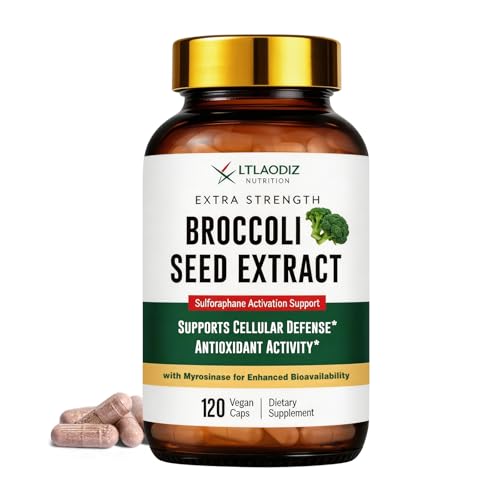
🛒 Where to Buy Sulforaphane
- Nutramax Laboratories Avmacol Regular Strength
tablets, 2 tablets daily — Sulforaphane-producing supplement used in human clinical trials; uses a glucoraphanin + active myrosinase Sulforaphane Production System - Swanson Sulforaphane Broccoli Sprout Extract
capsules, 1 capsule (400 mcg) daily — Budget-friendly option standardized to 0.4% sulforaphane from BroccoPhane concentrate - Source Naturals Broccoli Sprouts Extract
tablets, 1 tablet daily — Delivers 2,000 mcg sulforaphane per serving from freshly germinated broccoli sprouts - Nova Nutritions Broccoli Sprout Extract 1000mg
capsules, 1 capsule daily — Broccoli sprout extract; entry-level price point
As an Amazon Associate we earn from qualifying purchases. Sulforaphane quality depends on conversion, not price. Prefer a product that supplies active myrosinase or pre-converted stabilized sulforaphane rather than glucoraphanin alone, and look for a batch-specific certificate of analysis stating actual glucoraphanin or sulforaphane content, since a label that headlines sulforaphane while the supplement facts list only broccoli sprout extract gives you no way to verify potency.
A Note on the Evidence
The pregnancy-specific evidence here is limited to a handful of studies and ongoing trial protocols, not completed large-scale safety data, so no confident safety or risk conclusion should be drawn. Anyone who is pregnant, breastfeeding, or trying to conceive should talk to their OB, midwife, or physician before taking sulforaphane or broccoli sprout extract supplements, and this article is informational only, not medical advice.

Frequently Asked Questions
Does sulforaphane reach the baby during pregnancy?
Research indicates that sulforaphane derived from broccoli sprouts does undergo transplacental passage, and it has also been detected in breastmilk following maternal intake [1]. This confirms exposure occurs, but it does not by itself establish whether that exposure is beneficial, neutral, or harmful at any given dose.
Is there a clinical trial testing sulforaphane in pregnant women?
Yes, at least two exist as published protocols: a pilot trial of broccoli sprout powder in pregnant women with COVID-19 looking at symptom duration [3], and the Prolong trial testing broccoli sprout extract in women with early-onset preeclampsia [4]. Both were protocols at time of publication, meaning outcome data may still be forthcoming.
Has sulforaphane been shown to be dangerous in pregnancy?
The evidence reviewed here does not establish safety, and one animal study points to possible harm. In that mouse study, maternal diets rich in broccoli sprout powder or purified sulforaphane worsened carcinogen-related morbidity and tumors in offspring, whereas indole-3-carbinol reduced lung tumors [2], which underscores that pregnancy is a distinct biological context worth studying on its own, not assuming safety from general adult data.
Why does sulforaphane get studied for things like preeclampsia?
The proposed mechanism is Nrf2 pathway activation and upregulation of antioxidant/detoxification enzymes, systems relevant to oxidative stress, which is implicated in conditions like preeclampsia. That biological plausibility is why a controlled trial like Prolong was designed [4], but plausibility is not the same as proven benefit.

Are broccoli sprout supplements regulated or FDA-approved for pregnancy use?
No. Sulforaphane and broccoli sprout extract are not evaluated by the FDA as drugs for any indication, including pregnancy. They’re marketed as dietary supplements, which have a lower regulatory bar than medications.
What about eating broccoli or broccoli sprouts as food during pregnancy, versus taking a concentrated supplement?
The evidence cited here focused on broccoli sprout powder or extract at studied doses, not casual dietary intake of cooked broccoli. Concentrated supplements deliver a much higher and more consistent dose of sulforaphane precursor than typical food portions, which is part of why they’re the form being studied in clinical trials rather than assumed equivalent to eating vegetables.
References
- Whalen EF et al. Assessing the transplacental passage and breastmilk levels of broccoli sprout-derived sulforaphane. Placenta (2025). PMID 40992247
- Shorey LE et al. Differential modulation of dibenzo[def,p]chrysene transplacental carcinogenesis: maternal diets rich in indole-3-carbinol versus sulforaphane. Toxicology and applied pharmacology (2013). PMID 23566957
- Fields NJ et al. CO-Sprout-A Pilot Double-Blinded Placebo-Controlled Randomised Trial of Broccoli Sprout Powder Supplementation for Pregnant Women with COVID-19 on the Duration of COVID-19-Associated Symptoms: Study Protocol. Nutrients (2023). PMID 37764764
- Langston-Cox AG et al. Prolong: a double-blind randomised placebo-controlled trial of broccoli sprout extract in women with early onset preeclampsia. A clinical trial protocol. BMJ open (2019). PMID 31628121
- Ladak Z et al. Sulforaphane (SFA) protects neuronal cells from oxygen & glucose deprivation (OGD). PloS one (2021). PMID 33735260
- Tahata S et al. Evaluation of Biodistribution of Sulforaphane after Administration of Oral Broccoli Sprout Extract in Melanoma Patients with Multiple Atypical Nevi. Cancer prevention research (Philadelphia, Pa.) (2018). PMID 29691233
- Charles GD et al. An in vitro screening paradigm for extracts of whole foods for detection of potential toxicants. Food and chemical toxicology : an international journal published for the British Industrial Biological Research Association (2002). PMID 12387301
These statements have not been evaluated by the Food and Drug Administration. This information is not intended to diagnose, treat, cure, or prevent any disease. Content is for informational purposes only and is not medical advice; consult a qualified healthcare provider before starting any supplement. As an Amazon Associate we earn from qualifying purchases.
