Sulforaphane doesn’t exist ready-made in a raw broccoli sprout. It’s the product of a chemical reaction that only happens when the plant tissue is disrupted, chewed, cut, or crushed, bringing two separate compounds into contact for the first time. Understanding that reaction is the key to understanding why sprout quality, preparation method, and even how you chew your food can matter for how much sulforaphane your body actually gets.
This article walks through the biochemistry in plain language: what glucoraphanin is, what the enzyme myrosinase does to it, why broccoli sprouts are the richest practical source, and what happens after sulforaphane forms and activates the Nrf2 pathway inside your cells. It also flags where the underlying research is early-stage, cell-based, or animal-based rather than settled human evidence.
Key Takeaways
- Sulforaphane doesn’t exist pre-formed in broccoli; it’s created when the enzyme myrosinase converts glucoraphanin, and that only happens when plant cells are damaged (cut, chewed, or crushed).
- Broccoli sprouts contain much more glucoraphanin than mature broccoli, which is why sprouts and sprout extracts are the common source for sulforaphane products.
- Cooking can destroy myrosinase and block the conversion, even if glucoraphanin survives; raw or minimally processed sprout material preserves the enzyme better.
- Gut bacteria offer a secondary, less consistent conversion pathway when myrosinase has been deactivated by heat [1][2].
- Once formed, sulforaphane’s main studied mechanism is activating the Nrf2 pathway, which upregulates the body’s own antioxidant and detox enzymes; most supporting evidence is still cell-based, animal-based, or early-stage.
The Two Ingredients: Glucoraphanin and Myrosinase
Broccoli, broccoli sprouts, and other cruciferous vegetables store a compound called glucoraphanin, a glucosinolate that is biologically inert on its own. Sitting in a separate compartment within the same plant cells is myrosinase, an enzyme whose job is to break glucosinolates apart. In an intact, undamaged plant, these two are kept physically separate, so nothing happens.
The moment plant tissue is damaged, whether by a knife, a blender, chewing, or even insect feeding, cell walls rupture and glucoraphanin comes into contact with myrosinase. The enzyme converts glucoraphanin into sulforaphane through hydrolysis. This is the same general defense strategy many cruciferous plants use against pests and pathogens; sulforaphane and related isothiocyanates are, in effect, a plant’s chemical alarm system, and humans absorb it as a byproduct of eating the plant.

Why Broccoli Sprouts Contain So Much More Than Mature Broccoli
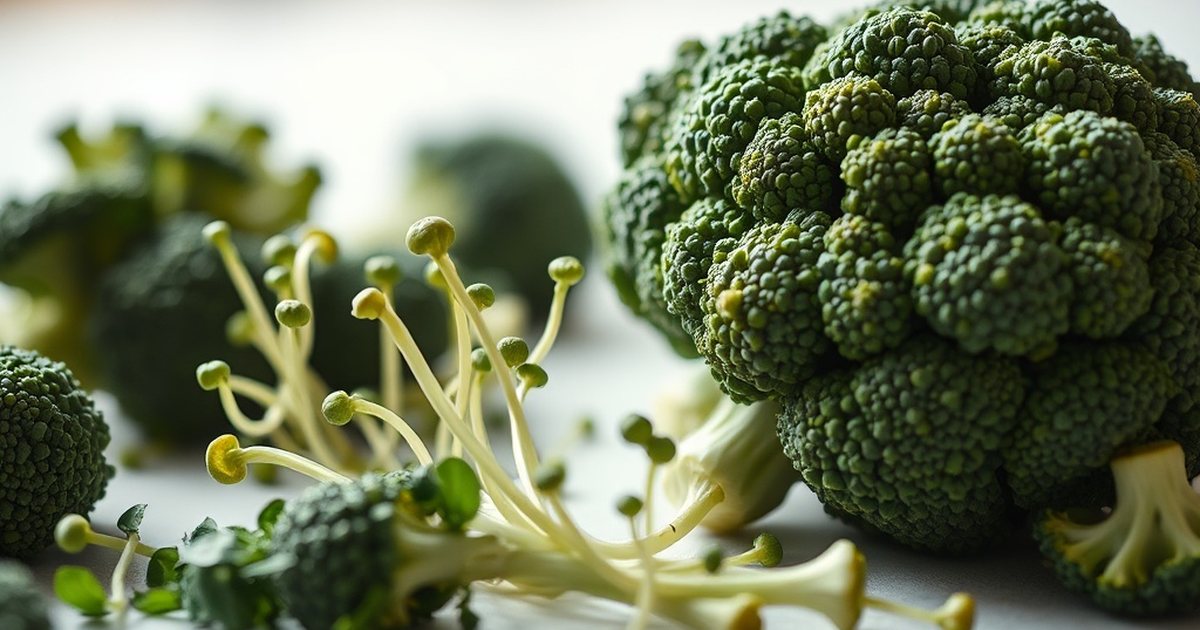
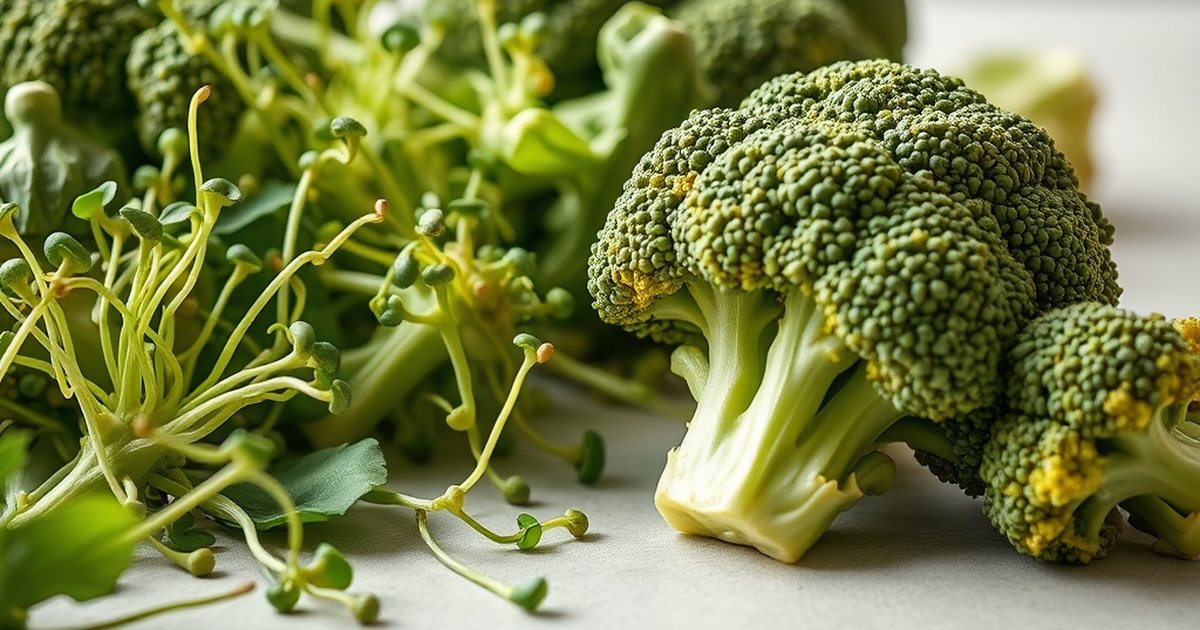
Broccoli sprouts, harvested just days after germination, contain substantially higher concentrations of glucoraphanin than the mature broccoli florets sold in grocery stores. This is a well-established horticultural observation: young sprouting tissue invests heavily in these defensive compounds before it has grown enough to rely on other protective structures.
This is why broccoli sprout extracts and sprout-based supplements are a common vehicle for sulforaphane research and products, rather than broccoli itself. It’s a difference in starting material concentration, not a different compound; the conversion chemistry (glucoraphanin plus myrosinase) is identical whether the source is a sprout, a stalk, or a floret.
What Happens to the Enzyme During Cooking
Myrosinase is a protein, and like most enzymes it is heat-sensitive. Cooking cruciferous vegetables, especially boiling or extended high heat, can denature myrosinase and shut down the conversion reaction before it happens, even though the glucoraphanin itself may survive. This is a widely cited reason that raw or lightly steamed preparations, and freeze-dried sprout powders processed to preserve enzyme activity, are treated differently from heavily cooked vegetables in sulforaphane-focused products.
Some products separate glucoraphanin and an active myrosinase source so the two combine at the time of consumption, or rely on gut bacteria as a backup conversion pathway (covered in the next section). The practical implication is that not all ‘broccoli sprout’ products deliver the same amount of usable sulforaphane, and the manufacturing and preparation method matters as much as the raw plant material.

A Backup Pathway: Gut Bacteria
If myrosinase has been destroyed by cooking, the glucoraphanin isn’t necessarily wasted. Certain bacteria in the human gut microbiota can carry out a similar conversion, producing sulforaphane or related metabolites from glucosinolates that reach the colon intact. This bacterial route is generally considered less efficient and more variable between individuals than the plant enzyme pathway, since it depends on which microbial species and enzymatic activity a person’s gut community happens to have.
Diet and the gut microbiome interact broadly with how phytochemicals like sulforaphane are metabolized and made available to the body [3]. This is an active area of nutrition research, and individual variation in gut bacterial composition is one reason people may respond differently to the same sprout intake.
What Sulforaphane Does Once It's Formed: The Nrf2 Connection
Once sulforaphane is absorbed, it is one of the most extensively studied natural activators of the Nrf2 pathway, a cellular signaling system that upregulates the body’s own antioxidant and phase II detoxification enzymes. Rather than acting as an antioxidant itself, sulforaphane works indirectly, prompting cells to ramp up production of their own protective enzyme systems.
This mechanism is central to much of the preclinical research on sulforaphane, including work on mitochondrial function and antioxidant capacity in muscle cells [4], immune cell metabolism during exercise [5], and glial cell behavior in neurodegenerative disease models [6]. It has also been studied for its mitochondrial and cellular protective role in other contexts, including gut and pancreatic tissue research [7]. Much of this evidence comes from cell and animal models rather than large human trials, so it should be read as mechanistic and early-stage rather than proof of clinical benefit in people.
Where the Evidence Stands
Sulforaphane sits within a broader category of dietary phytochemicals studied for anti-aging and longevity-related pathways across model organisms like C. elegans and Drosophila, as well as rodents and some clinical studies [8]. That breadth of study across simple model organisms through to limited human research is typical for this compound: the mechanistic story (glucoraphanin to myrosinase to sulforaphane to Nrf2 activation) is well characterized at the biochemical level, but translating that into confirmed, dose-specific human health outcomes is still an ongoing area of research.
🛒 Where to Buy Sulforaphane
- Nutramax Laboratories Avmacol Regular Strength
tablets, 2 tablets daily — Sulforaphane-producing supplement used in human clinical trials; uses a glucoraphanin + active myrosinase Sulforaphane Production System - Swanson Sulforaphane Broccoli Sprout Extract
capsules, 1 capsule (400 mcg) daily — Budget-friendly option standardized to 0.4% sulforaphane from BroccoPhane concentrate - Source Naturals Broccoli Sprouts Extract
tablets, 1 tablet daily — Delivers 2,000 mcg sulforaphane per serving from freshly germinated broccoli sprouts - Nova Nutritions Broccoli Sprout Extract 1000mg
capsules, 1 capsule daily — Broccoli sprout extract; entry-level price point
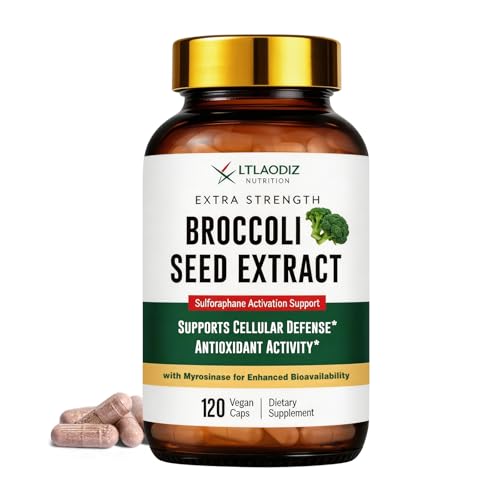
As an Amazon Associate we earn from qualifying purchases. Sulforaphane quality depends on conversion, not price. Prefer a product that supplies active myrosinase or pre-converted stabilized sulforaphane rather than glucoraphanin alone, and look for a batch-specific certificate of analysis stating actual glucoraphanin or sulforaphane content, since a label that headlines sulforaphane while the supplement facts list only broccoli sprout extract gives you no way to verify potency.

A Note on the Evidence
Sulforaphane and broccoli sprout extract are not FDA-evaluated as drugs, and most of the mechanistic evidence described here comes from cell and animal research rather than large human trials. Some people report GI upset at higher doses, very high cruciferous intake may have a mild goitrogenic effect relevant to thyroid conditions, and sulforaphane may interact with certain chemotherapy regimens, so anyone in active cancer treatment should consult their oncologist before use. This article is informational, not medical advice.
Frequently Asked Questions
Is sulforaphane naturally present in broccoli, or does it have to be made?
It has to be made. Broccoli and broccoli sprouts store the precursor glucoraphanin, which is only converted into active sulforaphane when the enzyme myrosinase reacts with it after the plant tissue is damaged, such as by chewing or chopping.
Does cooking broccoli destroy its sulforaphane potential?
Cooking, especially boiling, can denature the myrosinase enzyme needed for conversion, which can significantly reduce how much sulforaphane forms even though the glucoraphanin precursor may still be present. Lightly steaming or eating raw sprouts preserves more enzyme activity than extended high heat.
Why are broccoli sprouts specifically used instead of mature broccoli?
Broccoli sprouts contain substantially more glucoraphanin, the precursor compound, than mature broccoli florets do. Since the conversion chemistry is the same either way, a higher starting concentration of precursor generally means more potential sulforaphane.

Can my body still get sulforaphane if the myrosinase enzyme is destroyed by cooking?
Partially. Certain gut bacteria can convert leftover glucosinolates into sulforaphane or related compounds, though this bacterial pathway is generally considered less efficient and more variable between individuals than the plant enzyme reaction [2][9].
What does sulforaphane actually do once it's absorbed?
Its most studied mechanism is activating the Nrf2 signaling pathway, which prompts cells to increase production of their own antioxidant and phase II detoxification enzymes. Research on this mechanism spans muscle and mitochondrial studies [4], immune cell metabolism [5], and neuroinflammation models [6], though much of it is preclinical.
Is the Nrf2/sulforaphane research based on human studies?
It’s a mix, with a large portion coming from cell culture and animal models, and a smaller but growing body of human research. Reviews on phytochemicals like sulforaphane note evidence spanning simple model organisms through to some clinical studies [8], so findings should be interpreted as mechanistically promising rather than definitively proven in humans.
References
- Conaway CC et al. Disposition of glucosinolates and sulforaphane in humans after ingestion of steamed and fresh broccoli. Nutrition and Cancer (2000). PMID 11525594
- Fahey JW et al. Protection of humans by plant glucosinolates: efficiency of conversion of glucosinolates to isothiocyanates by the gastrointestinal microflora. Cancer Prevention Research (2012). PMID 22318753
- Beaver LM et al. Promotion of Healthy Aging Through the Nexus of Gut Microbiota and Dietary Phytochemicals. Advances in nutrition (Bethesda, Md.) (2025). PMID 39832641
- Moradi N et al. Sulforaphane, Urolithin A, and ZLN005 induce time-dependent alterations in antioxidant capacity, mitophagy, and mitochondrial biogenesis in muscle cells. Sports medicine and health science (2025). PMID 39649792
- Islam H et al. Recent advances in exercise immunometabolism: Immune cell bioenergetics, muscle-immune cell interactions, and potential dietary adjuvants. Current opinion in clinical nutrition and metabolic care (2025). PMID 40815154
- Darwish SF et al. The dual face of microglia (M1/M2) as a potential target in the protective effect of nutraceuticals against neurodegenerative diseases. Frontiers in aging (2023). PMID 37744008
- Chooklin S et al. Beyond Supportive Care: Mitochondria as a Strategic Therapeutic Avenue in Acute Pancreatitis. Digestive diseases and sciences (2026). PMID 41854947
- Chen JC et al. Anti-aging effects of dietary phytochemicals: From Caenorhabditis elegans, Drosophila melanogaster, rodents to clinical studies. Critical reviews in food science and nutrition (2024). PMID 36597655
- Fahey JW et al. Sulforaphane bioavailability from glucoraphanin-rich broccoli: control by active endogenous myrosinase. PLoS One (2015). PMID 26524341
These statements have not been evaluated by the Food and Drug Administration. This information is not intended to diagnose, treat, cure, or prevent any disease. Content is for informational purposes only and is not medical advice; consult a qualified healthcare provider before starting any supplement. As an Amazon Associate we earn from qualifying purchases.
